


Forth maize seeds were sown on a raised bed and thirty-five seeds germinated.
(a) (i) Calculate the percentage of the maize seeds that germinated [2 marks]
(ii) What is the percentage of the maize seeds that did not germinate? [2 marks]
(b) State four conditions that could have enhanced the germination of the thirty-five seeds. [4 marks]
(c) Suggest five reasons why some of the seeds did not germinate [5 marks]
(d) Give two industrial uses of maize seeds.
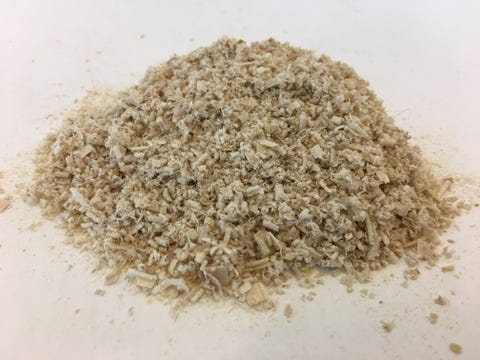
a) (i) identify specimens P and R [2 marks]
Specimen P:
Specimen R:

(ii) State three reasons why the use of specimen P is not recommended in a brooder house [3 marks]
(iii) Mention two other materials that could be used in place of specimen P in a brooder house [2 marks]
(iv) What is the name given to the product formed when poultry droppings mix with specimen P? [1 mark]
(v) State four uses of the product mentioned in (a) (iv) in agricultural production [4 marks]
(b) State three ways of controlling specimen R in crop production. (3 marks]
(a) Identify specimens D, E and F (3 marks)
Specimen D;

Specimen E;

Specimen F;

(b) Classify specimens D, E and F according to their mode of formation (3 marks)
(c) State three characteristics of each of specimens D and E (6 marks)
(d) State three ways in which specimen E is economically important.

(a) ldentify specimens I, J and K (3 marks)
Specimen I;

Specimen J;

Specimen K;

(b) State two uses of each of specimens I and J (3 marks)
(c) Give two maintenance practices for each of specimens I and K (4 maks)
(d) Describe specimen K
(e) Name two other farm tools that can perfom the functions of specimen K (2 marks)
(a) ldentify specimens N,O and P by their common and botanical names (6 marks)
specimen N;
specimen O;

specimen P;

(b) state how each of specimens N and O is propagated (2 marks)
(c) Give four characteristics of specimen O (4 marks)
(d) State three uses of specimen N (3 marks)

