


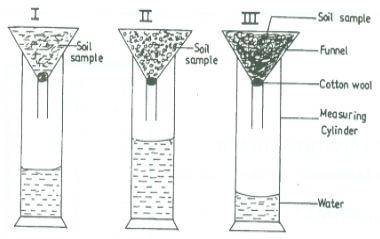
The diagram above illustrates an experimental setup to determine a soil property.
Study them carefully and answer the question that follows;
(a) Suggest a suitable title for the experiment. [1 mark]
(b) Outline the procedure for carrying out the experiment.[ 7 marks]
(c) identify the soil samples in diagrams 1, Il, and ll
(d) State two precautions to be taken when carrying out the experiment.[ 2 marks )
(e)(i) Which of the soil samples is prone to waterlogging?
(ii) Give one reason four your answer in (e)(i)
Study specimens A (RANGING POLE), B (SURVEY PIN) and C (MEASURING TAPE) carefully and answer the following question.
(a) Describe specimen A. (3 mark)
(b) State two uses each of the specimens A, B and C.
(c) State two ways of maintaining each of specimens A, B, and C
Study specimens G (GRASSHOPPER), H (BEAN BEETLE), I (BIRD), and J (RAT) carefully and answer the following questions.
(a)(i) Classify specimens G and H according to their feeding habits.
(ii) Name one part of crops damaged by each of specimens G and H.
(ii) State three ways in which specimen H is economically important. (3 marks ]
(b) State four ways of controlling each of specimens I and J

Study specimens N (BONE), 0 (EGG), P (ROUNDWORM) and Q (TICK) carefully and answer the following questions.
(a) Name three industries that use each of specimens N and O
(b) State five effects of specimen P on the host. (5 marks ]
(c) State four ways of controlling specimen Q on the farm. [4 marks)
Study specimens A (BONE), B (HORN), C (HOOF), D (WATER) and E (COWPEA) carefully and answer the following questions
(a)(i) State one major feed nutrient in each of specimens A and E
(ii) Mention three economic uses each of Specirnens A, B, and C
(b)(i) State two functions of specimen D in farm animals
(ii) Highlight two benefits that a farmer would derive if specimen E if included in a crop rotation program.

