(a)(i) Define the first ionization energy of an element
(ii) Consider the following table and use it to answer te question that follows
Element
Li
Be
b
C
N
O
F
Ne
Atomic number
3
4
5
6
7
8
9
10
1st I.E/kj mol\(^{-1}\)
520
900
801
1086
1402
1314
1681
2081
Explain briefly why the first ionization energy of B is less than that of Be despite the fact that the atomic number of B is greater than that of Be.
(b) When Titanium chloride was electrolysed by passing 0.12 A current through the solution for 500 seconds, 0.015 g of titanium was deposited. What is the charge on the titanium ion?
[ IF= 96500 C, Ti= 48.0 ]
(c)(i) Aluminium can be obtained by the application of electrolysis. State the electrolyte which yields aluminium on electrolysis.
(ii) Name two major factors which would favour the siting of an aluminium smelter in a country.
(d)(i) Define the term paramagnetism.
(ii) Consider the following ions: 24\(^{Cr ^{2+}}\), 24\(^{Cr^{6+}}\)
(I) Deduce the number of unpaired electrons in each of the ions.
(II) State which of the ions will have a greater power of paramagnetism
(l) Give a reason for the answer stated in (d)(ii)(II)
(ii) If 2.30 g of an oxide of nitrogen, x, contains 3.01 x 10\(^{22}\) molecules, calculate the molar mass of x.
(iii) Deduce the formula of x. N, =6.02 x 10", N =14.0, O = 16.0]
(b)(i) Describe briefly what happens when each of the following substances are added to water:
(I) CCI\(_{4}\); (II) SiCI\(_{4}\),
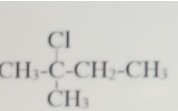
(ii) Explain briefly why the reactions in (a)(i), (b)(i), (I) and (b)(ii) (II) are different Study the diagram below and answer the questions that follow.
(c) Study the diagram below and answer the questions that follow.