(a) ldentify specimens E, F, G and H without reason (b) Name one excretory organ found in each o specimens E, F, G and H (c) (i) State the habitats of specimens E and H (i) Examine the limbs of specimen H. List two ways by which specimen H is adapted to the habitat (ii) Make a labelled drawing 8-10 cm long of specimen E
Specimens I and J are cross-sections of two plants whose cut ends were dipped in red ink or eosin (red dye) for at least 6 hours (a) Observe specimen I with the hand lens provided. Record your observation about the colouring of the tissues by the red ink or eosin.
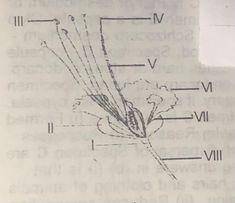
Which of the labellled parts represent the (a) female reproductive system (b) petal?

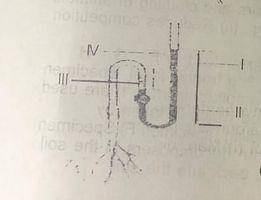
Study the diagram below and use it to answer questions (a)-(d)
(a) Name the set-up illustrated in the diagram (b) What is the apparatus used for? (c) What is contained in the part of the apparatus labelled IV? (d) From which part(s) of the apparatus would the reading(s) be taken after the experiment?