


Study specimens I (WHEELBARROW), J (FILE), K (PALM OIL) and L (COTTON LINT) carefully and answer the following questions.
(a) (i) Give two uses each of specimens I and J
(ii) State two general ways of maintaining specimens I and J
(b) (i) Give the botanical names of the crops from which, each of specimens K and L were obtained
(ii) Outline the steps involved in the traditional method of producing specimen K
Study specimens P (APHID),Q (COWPEA SEEDS) and R (COCONUT FRIUT)and answer the following questions;
(a) (i) State three effects of specimen P on crops
(ii) Mention two ways of controlling specimen Pl
(b)(i) Give two benefits of including the crop from which specimen Q was obtained in a mixed cropping system
(ii) Name the major storage pest of specimen Q
(c) State five uses of specimen R
(d) Give the botanical names of the crops from which specimens Q and R were obtained.
Study specimens T (CHICKEN EGG) and U (TILIPIA FISH) and answer the following questions;
(a)i. Name three breeds of the farm animal which produces specimen T
(ii) State four ways in which specimen T is economically important
(b)(i) Mention two methods of harvesting specimen U, from the pond
(ii) List two by-products that could be obtained from the processing of specimen U
(iii) State four methods of preserving specimen U

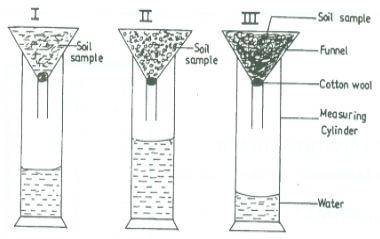
The diagram above illustrates an experimental setup to determine a soil property.
Study them carefully and answer the question that follows;
(a) Suggest a suitable title for the experiment. [1 mark]
(b) Outline the procedure for carrying out the experiment.[ 7 marks]
(c) identify the soil samples in diagrams 1, Il, and ll
(d) State two precautions to be taken when carrying out the experiment.[ 2 marks )
(e)(i) Which of the soil samples is prone to waterlogging?
(ii) Give one reason four your answer in (e)(i)
Study specimens A (RANGING POLE), B (SURVEY PIN) and C (MEASURING TAPE) carefully and answer the following question.
(a) Describe specimen A. (3 mark)
(b) State two uses each of the specimens A, B and C.
(c) State two ways of maintaining each of specimens A, B, and C

