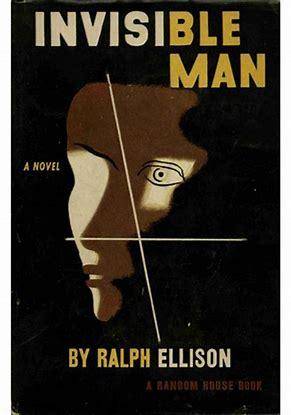
Invisible Man
The content of the novels on this website is provided as summaries to assist with revision. Candidates should ensure they read and fully understand all the relevant novels before the exams.
Invisible Man
Chapter 2
Summary
The Narrator reflects on his time at the college. He recalls the bronze statue of the college's Founder, a black man. He notes the statue’s cold, paternal appearance, with empty eyes. This symbolises the Founder’s distant and impersonal legacy.. The Narrator’s sense of reverence towards the statue is tainted by its lack of individuality. The Founder is a symbol of Booker T. Washington, a notorious black figure and leader. The statue of the Founder symbolizes the abstract and often hollow efforts of figures like Booker T. Washington, whose ideals may have contributed to the elevation of educated blacks but neglected the realities of economic and educational inequalities among black communities.
At the end of his junior year, the Narrator drives Mr. Norton, one of the college’s white benefactors, around campus. In an attempt to show Norton the countryside, the Narrator unintentionally leads him to a cluster of dilapidated cabins, once used as slave quarters, now housing poor black sharecroppers. The Narrator regrets this decision as the area is associated with Jim Trueblood, a man hated by the college for his incestuous act of impregnating his own daughter. Despite the Narrator’s discomfort, Norton insists on speaking with Trueblood, who recounts a strange dream that led him to the act of incest. Surprisingly, Norton responds not with condemnation but with morbid fascination, even offering Trueblood a one-hundred-dollar bill for his children’s toys. This interaction illustrates the feeling of condescension that the whites have towards the blacks as well
Trueblood expresses wonder at the fact that white people have showered him with more money and help than before he committed the unspeakable taboo of incest. Norton, shocked at the story, hands Trueblood a one-hundred-dollar bill to buy toys for his children. He gets back into the car in a daze and requests some whiskey to calm his nerves.
Things to Note:
-
The Founder’s Statue is a symbol of Booker T. Washington: Ellison’s first detailed image in Chapter 2 critiques the idea upheld by Booker T. Washington, a notorious black figure who sought the advancement of the black race through submission to the whites and the system that have been set out by them in the American society. The statue honouring the Founder, just like the legacy of Booker T. Washington, depicts an abstract father symbol rather than an actual individual. Both men seemingly set out to design a program for the advancement of black Americans (Washington founded the school now called Tuskegee University), and both, hailed as great visionaries, enjoy fervent worship on the part of their followers. Sadly, within the text, both have become invisible men: not even a record of their names exists in the novel. By omitting their names, Ellison attempts to signify such figures’ metaphoric invisibility within the real world—the futility of their actions and their failure to exert any real force on society. The novel also suggests that both men suffer blindness: with the statue’s “empty” eyes, Ellison implies that Washington’s philosophy is illusionary.
-
The Theme of Prejudice: In this chapter, Ellison explores the prejudice that exists between educated and uneducated blacks. Just as the monetary rewards of the battle royal incite the Narrator and his classmates to turn on one another in Chapter 1, the rewards of social advancement offered by the college incite the students and faculty to turn their backs on one of the least-empowered groups of American blacks: the poor sharecroppers. In an attempt to conform to the role of the model black citizen expected of them by white trustees, these higher-status blacks disown the dishonourable Jim Trueblood. This attempt to break from the lower-status blacks in order to gain greater favour with the white community illustrates the Narrator’s grandfather’s statement in Chapter One that blind conformity to the good slave role constitutes an act of treachery.
-
The Theme of White Condescension and Self-aggrandisement: With the character of Mr. Norton, the novel introduces another instance of white condescension and self-aggrandisement masquerading as generosity and philanthropy. Norton’s interest in the college stems more from self-interest than a genuine desire to improve the difficulties of black Americans.While they drove through the countryside, Norton tells the Narrator, “You are my fate” (Chapter 2). Norton never cedes to the Narrator the right to claim his fate as his own; instead, their fates become one. This seemingly benevolent white man actually possesses a latent racism, and he takes pride in his work with the college because it has allowed him to direct and control human life. Although he states that the students constitute his fate and that it is his destiny to improve their lives, Norton has, in reality, put himself in the position of determining their common fate.
Possible Questions
Multiple-choice questions (MCQs)
1. What is the significance of the bronze statue of the Founder at the college?
A) It symbolizes the college’s success and wealth.
B) It represents Booker T. Washington’s ideals and legacy.
C) It is a symbol of the college's commitment to education.
D) It is a tribute to the college’s white benefactors.
2. How does the Narrator describe the Founder’s statue?
A) Warm and welcoming, full of life.
B) Detailed and lifelike, capturing the Founder’s humanity.
C) Grand and majestic, with glowing eyes.
D) Cold, paternal, and with empty eyes.
3. How does Mr. Norton react to Jim Trueblood’s story?
A) He condemns him for his actions.
B) He listens with morbid fascination.
C) He expresses anger and disgust.
D) He offers him a job at the college.
4. What does Mr. Norton offer Jim Trueblood after hearing his story?
A) A job at the college.
B) A scholarship for his children.
C) A hundred-dollar bill for toys for his children.
D) Advice on how to improve his life.
5. What does Mr. Norton mean when he says, “You are my fate”?
A) He sees the Narrator as a role model for all black people.
B) He feels personally connected to the college’s success.
C) He believes that the Narrator controls his destiny.
D) He is making the Narrator responsible for his future success.
ANSWERS: 1. B 2. D 3. B 4. C 5. B
Theory Questions
-
Discuss the symbolic role of the Founder’s statue in Ralph Ellison's Invisible Man. How does it reflect the philosophy of Booker T. Washington and the critiques of his ideas in the novel?
-
Examine the relationship between the Narrator and Mr. Norton in this chapter. How does Mr. Norton’s behaviour reflect white condescension and self-aggrandisement?
-
In this chapter, the Narrator regrets taking Mr. Norton to see Jim Trueblood’s cabin. What does this incident reveal about the complexities of race and prejudice within the black community itself?