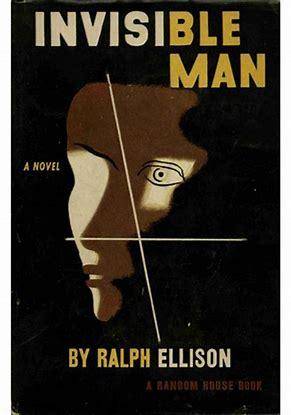
Invisible Man
The content of the novels on this website is provided as summaries to assist with revision. Candidates should ensure they read and fully understand all the relevant novels before the exams.
Invisible Man
Chapter 17
Four months later, Brother Jack contacts the narrator and invites him on a ride. Though curious about their destination, the narrator refrains from asking questions. He assumes that they might be heading to the Chthonian. However, their journey ends at a Spanish bar in Harlem called El Toro, where Brother Jack takes him for a drink. Since the arena speech, the narrator has had limited interactions with Brother Jack, as he has been deeply immersed in lessons with Brother Hambro. These lessons, coupled with attending rallies and meetings, have kept him extremely busy. This has allowed him to learn the inner workings of the Brotherhood. Despite being away from public events, he is still celebrated as a hero during meetings.
Over their drinks, Brother Jack enquires about the narrator’s progress with his studies and advises him to master the Brotherhood's ideology, cautioning him not to overdo it. He emphasizes the importance of balancing theoretical knowledge with words that inspire the masses, reminding the narrator that theory must follow practical experience. The narrator promises to meet the organisation’s expectations. Brother Jack then announces that the narrator will assume the role of chief spokesman for the Harlem district. He urged him to rally the community behind the Brotherhood's movement. He warns, however, that the narrator remains accountable to the organisation’s strict discipline.
Brother Jack takes the narrator to the Harlem chapter's office and introduces him to Brother Tarp, an older man with a limp who lives there. Tarp warmly welcomes the narrator and expresses his admiration for his arena speech. He assures the narrator of his support and encourages him to rely on him when needed. The next day, at his first meeting, the narrator arrives punctually to find all members present except Brother Tod Clifton, who soon arrives and explains his lateness—he has been injured in a clash with Ras the Exhorter’s men. Brother Jack introduces Ras as a black nationalist and advises Clifton to remain cautious while dealing with him. He reiterates the Brotherhood's commitment to nonviolence.
During the meeting, the narrator proposes stepping up efforts against evictions and forging alliances with Harlem's community leaders. Clifton agrees, and it is collectively decided that addressing dispossession, a widespread concern, could unite diverse factions in Harlem.
The narrator recalls having seen Ras previously but not knowing his identity then. The members explain that Ras opposes interracial cooperation and advocates for racial separation instead. Brother Jack departs after warning against underestimating Ras. Alone with the members, the narrator begins assessing his team. He is relieved to find Brother Clifton friendly and cooperative. Clifton offers guidance on how to handle hecklers and describes their efforts as potentially the most impactful movement since Marcus Garvey.
The narrator’s first street speech takes place atop a ladder and draws a sizable crowd. Clifton alerts him to the presence of Ras and his men in the audience. A confrontation erupts, and despite the Brotherhood's nonviolent stance, they are forced to fight back as Ras’s men grow aggressive. The scuffle descends into chaos, with streetlights shattered.The narrator fends off an attacker and witnesses Clifton and Ras locked in combat. Ras gains the upper hand but refrains from killing Clifton, citing his unwillingness to harm a fellow black man. Instead, he mocks Clifton for working with whites and accuses the Brotherhood of betrayal. The narrator intervenes and strikes Ras with a pipe, but Ras continues his fiery rhetoric. He urges them to embrace their African roots and denounce the Brotherhood as corrupt. Be says that the Brotherhood’s money unclean and that they must be attracted to its white women. Clifton strikes Ras and both men flee as police sirens approach. Clifton tells the narrator that Ras is crazy, but also warns that he is very strong on the inside. Finally, Clifton remarks that “sometimes a man has to plunge outside history,” or else risk insanity.
The next day at the office, Brother Tarp hangs a portrait of Frederick Douglass in the narrator's workspace. He tells the narrator that the portrait can be a source of inspiration. The narrator finds himself steadily gaining recognition. Even the head of Men’s House begins to address him with respect. A few Sundays later, the Brotherhood organises a parade in Harlem, where the narrator leads a special drill team to perform. Reflecting on this period, the narrator highlights that he loved his work during “those days of certainty.” During that time, he believed that his words had an almost magical power. Meanwhile, he has embraced the Brotherhood wholeheartedly, and he sees its teachings and ideals everywhere he goes.
Things to Note:
The Narrator’s Initial Success: At this stage, the narrator achieves his long-held aspirations for recognition and influence. However, Brother Jack’s warning against individualism foreshadows conflict. The narrator’s early success stems from his ability to connect with the community, while Jack’s grand schemes often overlook the impact of individuals like Clifton and the narrator. In hindsight, the narrator realises he had been blinded by the Brotherhood’s ideology, failing to critically evaluate its true intentions.
Brother Tarp as a Mentor: Brother Tarp, a steadfast member of the Brotherhood, symbolises resilience and dedication. His placement of Frederick Douglass’ portrait reflects the transformative potential of self-discovery and ambition, serving as a beacon for the narrator.
Ras’s Rhetoric: Ras’s impassioned speeches, though extreme, challenge the narrator’s trust in the Brotherhood. Ras exploits the narrator’s history of betrayal by white society, casting doubt on the Brotherhood’s sincerity. His words, though perceived as radical, resonate with deeper truths about identity and loyalty.
Frederick Douglass’ Portrait as a symbol: Brother Tarp may have put up the picture of Frederick Douglass for a variety of reasons. It may be because Frederick’s story is a story of the possibility in self-discovery. Frederick Douglass transformed himself from a slave into one of the great statesmen of the age. The narrator hopes he will be able to emulate Douglass’ prestige and moral authority.
Possible Questions
Multiple-Choice Questions (MCQs):
1. What role does Brother Jack assign to the narrator in the Harlem district?
A) Community organizer
B) Chief spokesman
C) Public relations officer
D) Chairman of the chapter
2. What is the primary reason Ras the Exhorter and his men oppose the Brotherhood?
A) They believe the Brotherhood is too radical.
B) They want to create an alliance with the Brotherhood.
C) They support the Brotherhood’s goals.
D) They advocate for racial separation and oppose interracial cooperation.
3. What does Brother Tarp hang in the narrator’s workspace as a source of inspiration?
A) A portrait of Marcus Garvey
B) A photograph of the narrator’s arena speech
C) A picture of Frederick Douglass
D) A map of Harlem
4. How does the narrator reflect on his work during "those days of certainty"?
A) He feels betrayed by the Brotherhood’s ideology.
B) He believes his words had a magical power and embraces the Brotherhood's ideals.
C) He regrets joining the Brotherhood and yearns for his old life.
D) He doubts the effectiveness of his work and feels disconnected.
5. What does Ras accuse the Brotherhood of doing during the street confrontation?
A) Betraying the black community by working with whites
B) Ignoring the needs of Harlem’s poor
C) Supporting the wrong political candidates
D) Encouraging black people to conform to white standards
6. Why does Brother Jack caution the narrator not to overdo his studies of the
Brotherhood's ideology?
A) He wants the narrator to focus more on theory.
B) He believes that the practical experience is more important than theoretical knowledge.
C) He thinks the narrator is studying the wrong materials.
D) He believes the narrator should avoid becoming too involved in Brotherhood affairs.
ANSWERS: 1. B 2. D 3. C 4. B 5. A 6. B
Theory Questions:
-
Analyze Ras the Exhorter’s critique of the Brotherhood. How do his ideas challenge the narrator’s commitment to the Brotherhood’s goals and his sense of identity?
-
In what ways does the narrator’s blind acceptance of the Brotherhood’s ideology contribute to his initial success? How do the actions of Brother Jack and Clifton shape his understanding of the organization?
-
How do Ras’s beliefs contrast with the Brotherhood’s values?