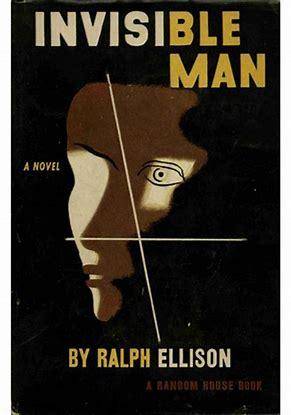
Invisible Man
The content of the novels on this website is provided as summaries to assist with revision. Candidates should ensure they read and fully understand all the relevant novels before the exams.
Invisible Man
Chapter 15
The narrator is suddenly woken up by a harsh clanging sound echoing through the building. The heating system has failed and someone is banging on the pipes in frustration. Annoyed by the deafening noise, the narrator realises he must quickly attend to his tasks for the day, including settling his debt with Mary and purchasing new clothes before contacting Brother Jack. Angry at the neighbour, he starts pounding on the pipes himself. While searching for something to use, he notices a cast-iron coin bank shaped like a caricatured black man, its mouth opening wide to "eat" coins placed in its hand. This grotesque image fills him with anger and resentment toward Mary for keeping such a racist imagery in her home. He seizes the coin bank and begins using it to strike the pipe.
The coin bank shatters under the impact, scattering pieces across the room. Startled by the noise, Mary approaches, asking if the commotion is coming from his room. Afraid that Mary will see what he has done, the narrator sweeps up the broken fragments and hides them in his coat pocket and tells Mary he’s still getting dressed. When he finally comes downstairs, Mary insists on preparing him a proper breakfast despite the continuing racket from the pipes. Over coffee, the narrator attempts to explain that he has money to pay her back, but Mary tells him not to worry about his rent. When he presses further, she seems taken aback by the amount of money and jokingly asks if he won the lottery. This provides an excuse for the narrator and he says he has.
Mary initially refuses the money, but the narrator insists on telling her that he has enough. Just as the conversation continues, a swarm of cockroaches streams into the kitchen having been disturbed by the banging pipes. The narrator and Mary quickly work together to kill them. Afterwards, the narrator prepares to leave. He slips the coin bank fragments into his briefcase hoping to dispose of them later.
Outside, the narrator struggles to discard the coin bank. He first tries to leave it in a trash can, but an old woman yells at him for putting his trash in her trash can and forces him to take it back. Next, he drops the package in the snow but a stranger retrieves it and chases him down. When the narrator denies ownership, the man grows suspicious and believes it to contain contraband. The narrator, fearing that the stranger might call the police, hastily leaves with the package still in hand.
Later, while shopping for clothes, he notices that his earlier outburst has been mentioned in the local newspaper. After purchasing new clothes, he travels to his new apartment provided by the Brotherhood. The space is spacious and comfortably furnished, with shelves lined with books and pamphlets related to the Brotherhood. Although the narrator plans to dispose of the coin bank later, he decides to focus on preparing for the rally that evening.
Things to Note:
The Coin Bank as a Symbol: The coin bank represents outdated and oppressive values that persist within society. Mary’s ignorance of the bank’s offensive nature highlights a lack of awareness or education about its symbolism. The narrator’s destruction of the bank signifies his desire to reject these relics of racism. However, the lingering fragments show how deeply ingrained such symbols are, making them nearly impossible to erase.
Difficulty in Erasure:The narrator’s repeated failures to discard the bank underscore the persistence of racism as a societal burden. It also reflects the narrator’s personal struggle to escape the legacy of such imagery, which he inadvertently carries with him. Through these events, Ellison highlights the weight of historical and cultural legacies, showing how they influence both collective and individual experiences.
Possible Questions
Multiple-choice questions (MCQs)
-
Why does the narrator initially start banging on the pipes?
a) To protest against the heating failure
b) To silence the banging from his neighbour
c) To call Mary for help
d) To test the durability of the pipes
-
What shape is the coin bank?
a) A caricatured black man
b) A cartoonish animal
c) A miniature building
d) A smiling clown
-
What does the narrator associate the coin bank with?
a) His childhood memories
b) Mary’s racist tendencies
c) Outdated and oppressive values
d) Wealth and prosperity
-
What reaction does the stranger have to the narrator’s denial of the package?
a) He becomes suspicious and thinks it contains contraband
b) He apologises and walks away
c) He throws the package back at the narrator
d) He hands the package to the police
-
What is the narrator’s primary focus after arriving at his new apartment?
a) Disposing of the coin bank
b) Preparing for the rally
c) Reading the books and pamphlets
d) Cleaning and decorating the apartment
ANSWERS: 1. B 2. A 3. C 4. A 5. B
Theory Questions
-
Explain the symbolic significance of the coin bank in the passage.
-
Discuss how the narrator’s experience with the coin bank illustrates the challenges of confronting systemic racism.