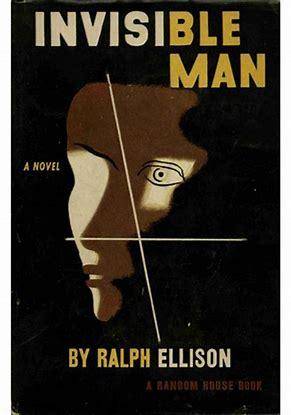
Invisible Man
The content of the novels on this website is provided as summaries to assist with revision. Candidates should ensure they read and fully understand all the relevant novels before the exams.
Invisible Man
Chapter 11
Summary
The narrator finds himself seated in a white chair in a hospital dressed in white overalls. He is administered medication while voices discuss his condition. He overhears that he will remain under observation for a few days. Though the doctors pose questions to him, the narrator struggles to respond, his mind feeling blank and detached. The sterile environment seems to dull his senses, and soon, the scene around him fades. When his thoughts begin to clear, he realises he is strapped inside a “glass and nickel box.” The distant sound of what might be music reaches his ears, blending with memories of nonsensical childhood songs. Among these faint sounds, he discerns the voice of a doctor.
A doctor with thick glasses asks him about his condition, to which the narrator responds that the box feels too confining. He overhears a discussion about how the box is intended to treat him without surgery, acting as an alternative to lobotomy. The doctors debate the efficacy of this approach, questioning whether it will function the same way on a black man. Amidst their clinical deliberations, one doctor even proposes castration. Ultimately, they decide to administer high-voltage electric shocks. The narrator's body writhes uncontrollably under the force of the shocks, prompting a doctor to remark, “They really do have rhythm, don’t they?”
Although the cruelty of the treatment should ignite his anger, the narrator feels strangely disconnected. Post-treatment, he can barely move within the box, experiencing the world as fragmented sensations. Voices reach him, but their words remain incomprehensible. Gradually regaining semi-consciousness, he notices two doctors arguing above him. A man approaches the box with a card reading, “WHAT IS YOUR NAME?” This question startles the narrator, who realises he has forgotten his own name. Subsequent questions about his identity leave him equally perplexed—he cannot recall his mother’s name or answer basic inquiries about himself.
Eventually, one of the doctors writes, “WHO WAS BUCKEYE THE RABBIT?” This question stirs a memory of black southern folklore, igniting a spark of recognition within the narrator. Though he remains unable to articulate his identity, he begins to associate himself with Buckeye the Rabbit and later Brer Rabbit, both figures from his cultural heritage. The narrator perceives this interaction as a psychological game, an unspoken battle of wits with the doctors. Despite his growing awareness, he knows escape from the machine is impossible. He resolves inwardly: “When I discover who I am, I’ll be free.”
Finally, the doctors and a nurse remove the lid of the machine, instructing the narrator to climb out. They inform him he is in the “factory hospital.” A nurse helps him out of the device, and the doctors, noting his unusual strength, declare him “cured.” After dressing, the narrator is escorted to a reception room, where he is told the factory director will see him. During their meeting, the director treats him impersonally, glancing at his medical chart instead of awaiting his reply to questions. The director informs him that he is being released because he is unfit for the demands of industrial work.
The director advises the narrator to find less strenuous employment and offers compensation in exchange for signing a waiver absolving the factory of liability. He dismisses the injury as an inevitable occupational hazard and a part of growing up. Unexpectedly, the narrator asks the director if he knows Mr. Norton. The director tries to deflect the question, but the narrator repeats it, eventually joking that Norton and Dr. Bledsoe are old acquaintances. This new boldness surprises the narrator, who realises he no longer feels intimidated. With a renewed sense of self, he boards a train back to Harlem.
Things to Note:
Racial Discrimination in the Hospital Setting: In the hospital setting, whiteness is equated with cleanliness and health. The narrator has a great deal of difficulty collecting his thoughts after the explosion at the paint factory, an indication that after his failed experience he is even more severed from his past life and himself. When the narrator finds himself in the box, he has become more of a specimen in an experiment than a patient. The white, sterilised space confuses him, allowing his mind to wander back to the familiarity of childhood. There is something unreal about the hospital facility, which is never described in realistic terms. The doctors don’t treat the narrator like a human, and their speech seems informed by eugenics, the idea that certain races are biologically inferior to others. The doctors, supposedly members of an ethical profession, quickly reveal that they are cruel and careless. They shock the narrator to try to “cure” him, though his only “illness” is his blackness. The doctor begins to ask him questions about his identity. The narrator is unable to think coherently about his own identity, but the doctor’s question has a twofold effect. It is reflective of the narrator’s invisibility, as the doctors simply wish to recognize him through an obvious piece of black culture. However, it is also a piece of the narrator’s past that he has long ignored.
The Narrator Reaches an Epiphany: The meeting with the factory director reveals the institution’s self-interest. By releasing the narrator and offering compensation, the factory shields itself from liability by framing the injury as an educational experience. This highlights the systemic exploitation inherent in industrial society. The narrator’s boldness in questioning the director signifies a turning point. By invoking Norton and Bledsoe, he confronts the power dynamics that once subdued him. This newfound assertiveness indicates his growing awareness of his identity and autonomy. His declaration that self-discovery is the key to freedom reflects his determination to reclaim his sense of self in a world designed to erase it.
Possible Questions
Multiple-choice questions (MCQs)
-
What is the doctors’ justification for administering electric shocks?
A. To calm the narrator’s nerves
B. As an alternative method of treatment
C. To induce a coma for recovery
D. To improve his physical strength -
What does the director imply when dismissing the narrator from the factory?
A. He is physically unfit for industrial work
B. He is mentally unstable and needs further care
C. The injury was entirely his own fault
D. The factory values him as an employee -
What theme is explored through the doctor’s treatment of the narrator?
A. The conflict between science and religion
B. The importance of patient consent
C. The advancements in medical technology
D. The dehumanisation of individuals based on race -
What change does the narrator experience by the end of the story?
A. He becomes more submissive
B. He feels detached from his identity
C. He gains confidence and boldness
D. He loses all hope of freedom -
What does the narrator resolve to do after his hospital experience?
A. To avoid industrial work entirely
B. To discover his true identity
C. To seek revenge on the doctors
D. To confront Mr. Norton directly
ANSWERS: 1. B 2. A 3. D 4. C 5. B
Theory Questions
-
Analyse the role of racial discrimination in the narrator’s treatment by the doctors.
-
How does the use of medical and industrial imagery enhance the themes of the story?
Evaluate the significance of the narrator’s resolution: “When I discover who I am, I’ll be free.”