The cabinet system of government embody the principle of separation of powers because
it does not encourage the appointment of a president
the exective is not separate from the legislature
it gives less powers to a prime minister than a president
the executive is not directly appointed by the electorate
the speaker controls the activities of the house
Explanation
Video Explanation
No video available
Post your Contribution
Discussions (7)

Actually, this is a trick question because the Cabinet (Parliamentary) system is usually the opposite of "Separation of Powers"—it is based on the Fusion of Powers.
However, if your past question is asking why it embodies the principle or how it functions, the correct answer is B. the executive is not separate from the legislature.
Wait, how does that work?
In a Cabinet system (like the UK), the Prime Minister and all Ministers must be members of Parliament. This means the Executive and Legislature are "fused" together.
The reason this is sometimes used to explain "Separation" in exams is to highlight the contrast:
In a Presidential system (like Nigeria/USA), the President is separate from the Legislature.
In a Cabinet system, they are not separate, but they still have different functions.
Breakdown of the Options:
 A: Having or not having a President (who might just be a figurehead) isn't what defines the separation of powers.
 B (Correct/Key Feature): This is the defining characteristic of the Cabinet system. The Executive is "born" out of the Legislature.
C: A Prime Minister can actually be more powerful than a President because they lead the majority in Parliament, making it easier to pass laws.
D: While true (the PM is chosen by the party, not the people directly), this describes appointment, not the division of power between branches.
E: The Speaker manages the House, but this doesn't explain the relationship between the Executive and the Legislature.
Important Exam Tip:
If the question asks for a system that strictly follows the Separation of Powers, the answer is always the Presidential System. If it asks about a system where powers are fused, the answer is the Cabinet/Parliamentary System.
Does it make sense why B is the "odd one out" compared to how the USA or Nigeria runs their government?
AI can make mistakes, so double-check responses
I THINK THIS WOULD HELP US COMPREHEND IT. THEY ARE FUSED BUT THEY EMBODY SEPARATION OF POWER IN THE FACT THAT THEY ARE FUSED BUT PERFORM DIFFERENT OR SEPARATE FUNCTIONS
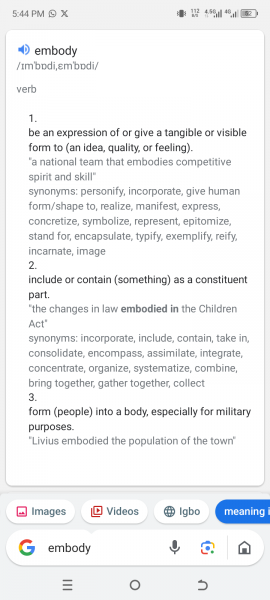
Do you know the meaning of "embody"?
If you do, then there's no way B would be the right answer.