3.0Ω
13.3Ω
15.0Ω
30.0Ω
Explanation
Video Explanation
No video available
Post your Contribution
Discussions (20)

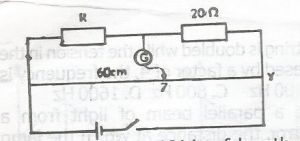
Figure X is missing,and it is to be located at the other end opposite Z and Y from the solution given. Then from the question XY=1m. Converting 1m to cm.
1m=100cm
therefore;ZY=100cm-60cm
=40cm.
then:R=60cm,20ohms=40cm
so therefore;R=30ohms.
Myschool I transferred 1k to your Zenith Bank account yesterday evening for myschschool app activation but up till now you guys didn't sent me my order code. I hope it is not a scam? I SMS and Email you guys but no respond.

Explanation
No official explanation is available for this question at this time. Please check contributions posted by others below. If you can provide an explanation to help other student learn, please click here
Please I have An Explanation But There Is No Place To Click.
It Says Click Here...... I Click It Doesn't Change,

🧱 What we have:
A 1-meter (100 cm) long wire XY.
A galvanometer connected at point Z, which is at 60 cm from X.
A known resistor of 20Ω on one side.
An unknown resistor
𝑅
R on the other side.
The bridge is said to be balanced at point Z.
🧠 Important Concept: Wheatstone Bridge Balance Condition
At balance point (no current through galvanometer):
𝑅
1
𝑅
2
=
𝐿
1
𝐿
2
R
2
R
1
=
L
2
L
1
Where:
𝑅
1
=
𝑅
R
1
=R (unknown resistor)
𝑅
2
=
20
Ω
R
2
=20 Ω
𝐿
1
=
60
cm
L
1
=60 cm
𝐿
2
=
40
cm
L
2
=40 cm (since the total length is 100 cm)
 Step-by-step Solution:
𝑅
20
=
60
40
20
R
=
40
60
𝑅
20
=
3
2
20
R
=
2
3
Multiply both sides by 20:
𝑅
=
20
×
3
2
=
30
Ω
R=20×
2
3
=30 Ω
 Final Answer: D. 30.0Ω

