With the aid of diagrams, describe the formation and appearance of any two of the following features:
(i) Stack (ii) Blow Hole (iii) Sand Bar


(i) STACK:
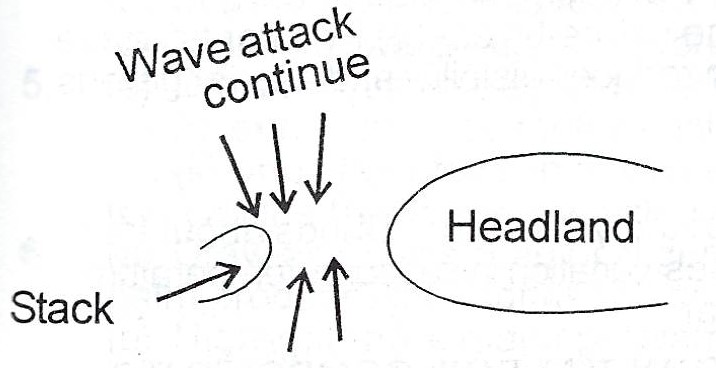
(a) FORMATION:
— Formed by wave erosion.
— Presence of a headland
— Wave erosion attacks headland at both sides
— Two waves formed in opposite sides of the headland
— Further erosion of caves produces an arch when waves joined up
— Roof of arch collapse
— The seaward portion of the headland remains as a pillar known as a stack
(b) APPEARANCE:
— Feature of the coast.
— Seaward part of the headland left standing
—Varies in size depending on the resistance of the rock.
— Further erosion of stack produces stump.
— Examples are the Needles, Oldman of Hoy.
(ii) BLOW HOLE:
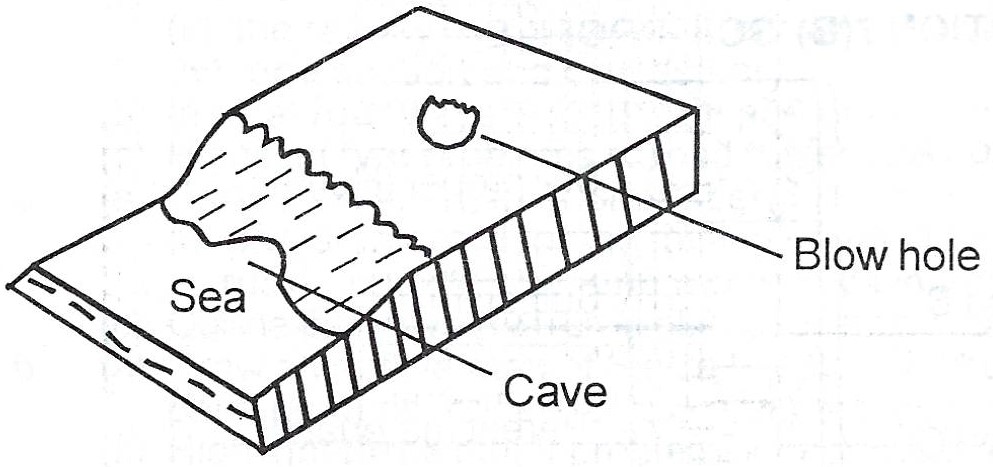
(a) FORMATION:
— Formed by wave erosion in a coastal cliff.
— Less resistant rock or line of weakness at the base of the cliff
— Cave is produced.
— Spray water in the cave enlarge a vertical joint in the roof.
—Hydraulic action of waves causes loose blocks to fall in.
— Wave Headland breaking into the cave may force water out of the hole known as blow hole.
(b) APPEARANCE:
— Coastal feature on a cliff. Joints and faults enlarged.
— A funnel is cut into the cliff.
— Some caves extend some distance inland beneath the cliff.
— Vertical pit is produced.
— Spray water thrown through the pit.
— Examples are found on the coast of Scotland.
(iii) SAND BAR
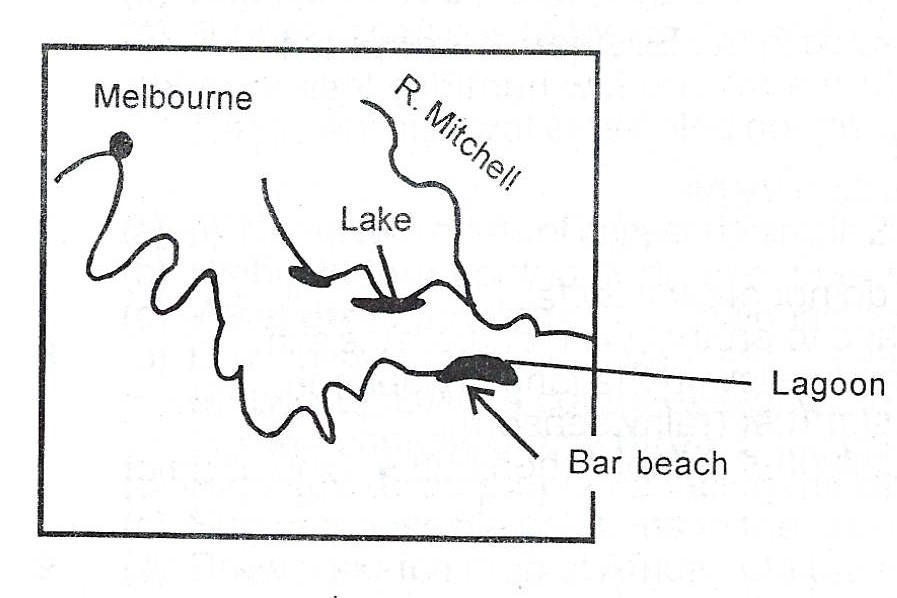
FORMATION:
(b) APPEARANCE:
— Waves open narrow channels on it.
— Produces coastal features of an offshore bar a few metres above sea level.
— Lies parallel to the shore not continuous.
— At times covered by water at high tides and exposed at low tides





Contributions ({{ comment_count }})
Please wait...
Modal title
Report
Block User
{{ feedback_modal_data.title }}