An increase in liquid reserve requirements by the central bank of Nigeria will result in
a reduction in commercial banks' excess reserves
more commercial bank loan to members of the public
an increase in commercial banks excess reserves
no change in commercial banks excess reserves
a reduction in central banks gold reserves
Explanation
No explanation available
Video Explanation
No video available
Post your Contribution
Discussions (23)

d answer is A not b or c becos liquidity ratio monetry policy taking about the amout the commercial bank is expected to keep with d central bank,so an increase in dis will cause d commercial bank exess reserve to decrese in other to reduce d money in circulation in d economy,dis is mostly used to control inflation.....

A is crt
Raising the reserve requirement reduces the amount of money that banks have available to lend. Since the supply of money is lower, banks can charge more to lend it. That sends interest rates up.
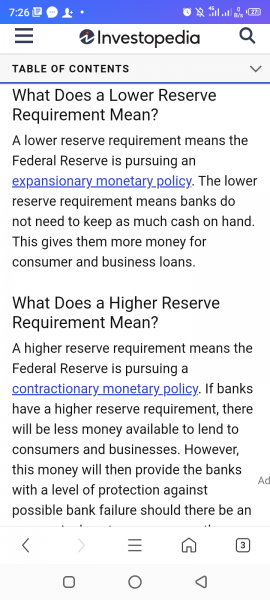
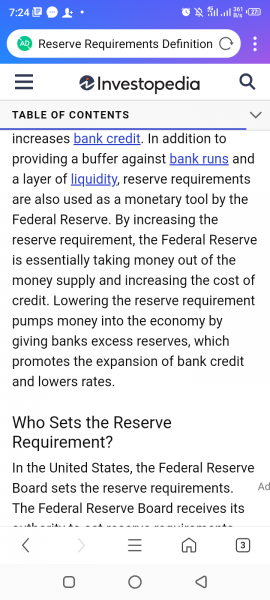

The correct answer is c because if there is an increase in reserve it will lead to
1 increase in commercial bank reserve
2 decrease in the abilities of commercial Bank to lend
Thanks

the answer suld b a bcuz it is a measure taken by d cbn 2 control excess money in circulation wich thereby reduces the reserves of the commercial banks

Confused stude.... No! Confused blockheadz. The correct answer is Capital C. Cnt be wastin ma data arguin on smtin lyk dis

Hmmm....Am nt sure of dis.I tink it's A cos wen D CENTRAL bank calls 4 high rate of liquid reserve 4rm commercial bank it wil cause reduction in d excess reserve in commercial bank.

A should be de ans cos by so doing commercial bank ability 2 provide money 4 dr customa will be limited



