Sodium
Magnesium
Iron
Calcium
Copper
Explanation
Video Explanation
No video available
Post your Contribution
Discussions (62)

Metals above hydrogen in the activity series can displace or replace hydrogen present in water(H2O) example of such metals are Ca, K, Na etc. But the metals below hydrogen in the activity series cannot replace hydrogen in the activity series example of such metals are Cu Hg. I hope yuo get the best understanding from this my contribution

Hydrogen can only b displace in a compound by a metal higher dan itself in d activity. Series. Metals lower dan hydrogen cannot displace it 4rm a solution. Magnesium,calcium,iron and sodium are all higher dan hydrogen in d activity series

metals above hydrogen in the reactivity series are the only metals that can displace it.. magnesium,sodium, iron and calcium are above hydrogen in the series but copper is below and so it cannot displace hydrogen.

In activity series in metal, copper is lower than hydrogen and as such, cannot replace hydrogen in the reaction. But hydrogen can be replaced by other metals higher than it in the activity series.

Hydrogen can önly be replace by a compound whic is higher than it in a reaction so copper cannot replace hydrogen bcoz hydrogen is higher in d series.
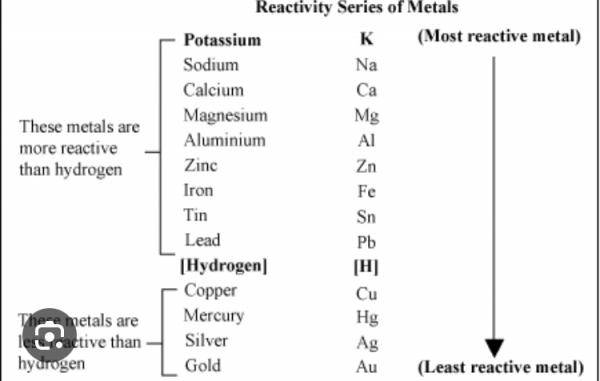
this image will be of help, elements below hydrogen in the activity series cannot replace it
Reactivity series include: k>Na>Ca>Mg>Al>Zn>Fe>Ni>Sn>Pb>H>Cu>Ag>Au.
looking at this series of reactivity ,you will notice that Cu is below Hydrogen . therefore cannot replace it from a water or stem.
Metals above hydrogen in the activity series can displace or replace hydrogen present in water(H2O) example of such metals are Ca, K, Na etc. But the metals below hydrogen in the activity series cannot replace hydrogen in the activity series example of such metals are Cu Hg. That is why copper is the answer. I hope yuo get the best understanding from this my contribution


Only metals higher than hydrogen in the activity series can displace hydrogen to form hydroxides, metals like zinc,magnesium,aluminium,sodium,iron,calcium,potassium,lead,tin & some few more but metals lower than hydrogen in the actitivity series can't, metals like copper,mercury,gold,silver & some more can't instead they combine with oxygen in the water molecule to form oxides.copper won't displace hydrogen instead combine with oxygen to form an oxide. I go with copper E

Here is an explanation:
this answer is correct because copper is the least in the activity series and it can displace hydrogen
Because copper is below hydrogen in the electrochemical series.so only element above hydrogen can displace H from its solution
Only metals above hydrogen in the activity series can displace hydrogen but copper is below hydrogen on the activity series so it cannot displace hydrogen.
Here is an explanation:
cupper is below hydrogen in the reactivity series i.e cupper is less reactive than hydrogen so cannot displace it from water or steam
Due to the arrangement of the reactivity series: Potassium>Sodium>Calcium>Magnesium>Aluminium>Zinc>Iron>Tin>Lead>Hydrogen>Copper>Mercury>Silver>Gold. Copper is unable to displace hydrogen.