(a)(i) List two characteristics of homologous series.
(ii) Consider the compound represented by the following formula: CH\(_3\)(CH\(_2\))\(_2\)CH\(_3\). I. Which homologous series does the compound belong? II. Write the structures of three possible isomers of the coumpound. III Name the three possible isomers in (a)(ii)II.
(b) Write the structure of the major product formed in each of the following reactions: (i) ethanol with excess acidified potassium tetraoxomanganate (VII);
(ii) excess ethane with chlorine in the presence of sunlight;
(iii) ethanol with propanoic acid in the presence of few drops of concentrated tetraoxosulphate(VI) acid.
(c) Name the major product in each reaction in (b).
(d) Consider the following organic compounds:
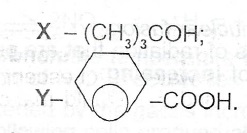
(i) Give the IUPAC name of each compound.
(ii) State a chemical test for the functional group in each compound.
(e) An organic compound with relative molecular mass 136 contains 70.57% carbon, 5.90% hydrogen and 23.53% oxygen. Determine its: (i) empopirical formula; (ii) molecular formula. [H= 1.00, C= 12.0, H = 16.0]
Explanation
Video Explanation
No video available
Post your Contribution
Discussions (0)
No comments yet
Be the first to comment

