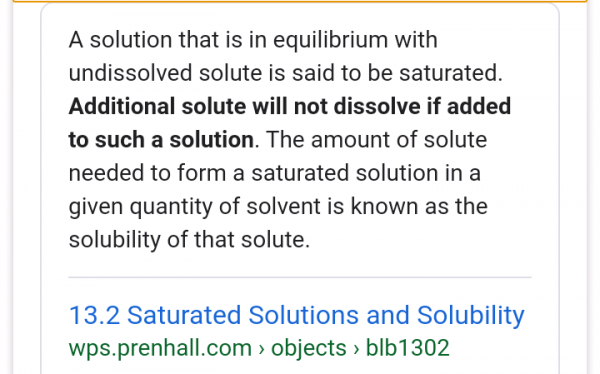
In a saturated solution at a given temperature, the undissolved solutes are in equilibrium with
the solvent
dissolved solute particles
the saturated solution
insoluble solute particles
Explanation
Video Explanation
No video available
Post your Contribution
Discussions (12)



In a saturated solution, Equilibrium is btw dissolved and undissolved solute particles 😋 so option B

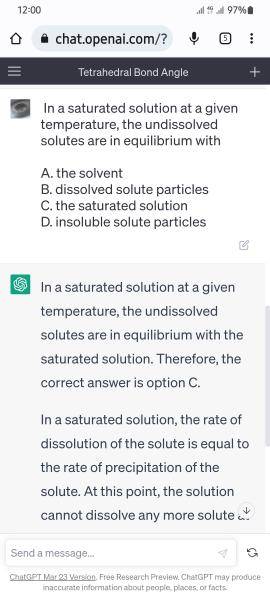

Option B: dissolved solute particles
Explanation:
Dynamic Equilibrium: In a saturated solution, the solution holds the maximum amount of dissolved solute at a particular temperature. Any additional solute will remain undissolved because the solution has reached its saturation point.
Equilibrium Process: At this point, there is a dynamic equilibrium between the undissolved solute and the dissolved solute particles. Some particles are constantly dissolving while others are precipitating out, but the overall concentration of dissolved solute remains constant.
Why Other Options Are Incorrect:
Option A: the solvent: The solvent is the medium in which the solute dissolves, but the equilibrium specifically involves the dissolved and undissolved solute particles, not the solvent by itself.
Option C: the saturated solution: While the entire saturated solution is a system in equilibrium, the equilibrium specifically involves the dissolved and undissolved solute particles.
Option D: insoluble solute particles: This refers to solute particles that do not dissolve at all, which is not the same as the situation in a saturated solution where some solute is dissolved, and some remains undissolved in equilibrium with it.

no much talk
i am referencing @myschool team to Ababio (Water, solubility and solutions)
I believe after reading it thry will jejely modify thr answer to B