A sheet of paper is placed in the path of a beam from a radioactive source. The emissions that pass through the paper consist of
alpha particles and gamma rays
alpha and beta particles
beta particles and gamma rays
alpha particles only
Explanation
Video Explanation
No video available
Post your Contribution
Discussions (2)

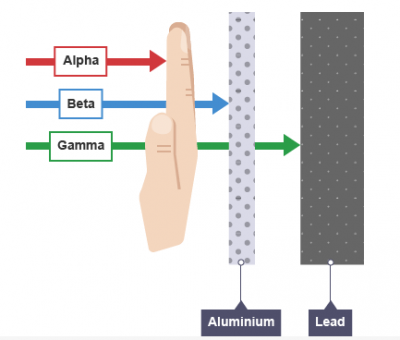
Alpha radiation consists of helium nuclei and is readily stopped by a sheet of paper. Beta radiation, consisting of electrons or positrons, is stopped by thin aluminum plate, but gamma radiation requires shielding by dense material such as lead, or concrete. option c very correct

To solve this, consider the penetrating power of different types of radioactive emissions:
* Alpha particles: These are the largest and least penetrating. They can be stopped by a sheet of paper or even a few centimeters of air.
* Beta particles: These are smaller and more penetrating than alpha particles. They can pass through paper but are stopped by a thin sheet of aluminum.
* Gamma rays: These are the most penetrating. They can pass through paper, aluminum, and even several centimeters of lead.
Therefore, the emissions that can pass through a sheet of paper are beta particles and gamma rays.
So the answer is (C).

