100KJ
300KJ
250KJ
200KJ
Explanation
Video Explanation
No video available
Post your Contribution
Discussions (24)

The answer is option A not D. Because
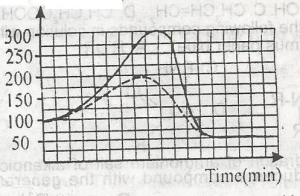
Activation energy = catalyzed rxn minus uncatalyzed. Which is 300 minus 200 = 100kj


Energy of reactants: approximately 100 kJ
Peak of catalyzed curve: approximately 200 kJ
Now, calculate the activation energy:
Activation Energy = Peak - Reactants = 200 kJ - 100 kJ = 100kJ
Final Answer: A. 100 kJ
according to what Chatgpt gave me

Solution:
Ea = ETs – ER
Ea ( uncatalyzed reaction) = (300 – 100) kj = 200kj
Ea ( catalyzed reaction ) = (200 – 100) = 100kj
Note. The question requires the activation energy for the catalyzed reaction, so answer is
Ea ( catalyzed reaction ) = (200 – 100) = 100kj.
Assuming they asked for the uncatalyzed reaction, answer would have been .
Ea ( uncatalyzed reaction) = (300 – 100) kj = 200kj
And assuming, enthalpy change of the catalyzed and uncatalyzed reaction is asked to determine, then it becomes
∆H⁰r = ∆H(uncatalyzed reaction) - ∆H(catalyzed reaction)
= (300kj - 100kj) = 200kj.

200-100= 100. The reaction starts at 100 so you minus it from that of the catalyzed reaction
It's 100
Energy difference of uncatalysed peak minus energy difference of catalysed peak
Uncatalysed peak - reactant side = 300 - 100 = 200
Catalysed peak - reactant side as the reaction continues is 200 minus 100 the original starting point of the catalyst= 100
U might not understand sha
The activation energy for the catalyzed reaction is 100kJ
i dont know what these people are doing

A catalyst lowers the activation energy
increasing the rate of reaction
So the answer should be D

Pinky that's not true ...u are using d activation energy of the catAlyst....the ans is 300kj-100kj=200kj being option D
gosh...now thses guys are confusing. The answer obviously is 200KJ becos we can see the catalyzed path... dunno where 100KJ came from.

