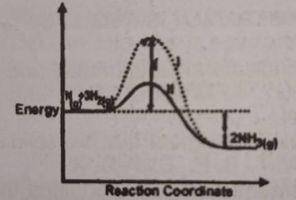
for path l is higher than path ll
for path ll is higher than path l
is the same for both paths at all temperatures
depends on the values of both x and y at all pressures
Explanation
Video Explanation
No video available
Post your Contribution
Discussions (15)

The answer is B because the higher the activation energy, the lower the rate of reaction.
In this picture, the activation energy for path I is greater than the activation energy for path II. This means the rate of reaction for path II is greater than path I or rate of reaction for path I is lesser than path II
The activation energy of a chemical reaction is closely related to its rate. Specifically, the higher the activation energy, the slower the chemical reaction will be.
option B is actually correct, because the activation energy in path I is higher and the reaction will be slower because the reaction will require more energy for the product to be attained, and in path II the activation energy is low, i.e product will be attained faster, this means that the rate of reaction for path two is higher than the rate in path one.
Note : they didn't ask for the path with higher activation energy, they asked for rate of reaction.


