potassium tetraxochlorate (VII) and concentrated H2SO4
potassium trioxochlorate (V) and concentrated H2SO4
potassium tetratoxomanganate (VII) and concentrated HCI
manganese (IV) oxide and concentrated HCI
Explanation
Video Explanation
No video available
Post your Contribution
Discussions (37)

The selected answer is wrong:
in the production of dry chlorine gas, concetrated hydrochloric acid is mixed with pottasium tetraoxomanganate (VII)
REF: new school chemistry page 353, experiment 21.1: how to prepare chlorine by the oxidation of hydrochloric acid with pottasium tetraoxomanganate(VII)

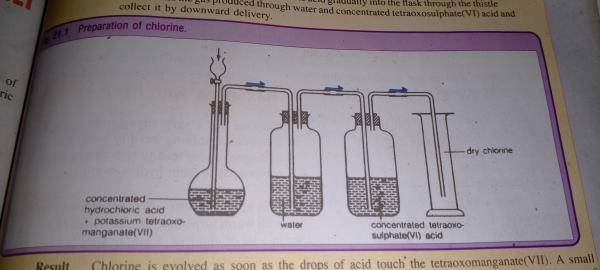

the answer is wrong according to new school chemistry page 354
only tetraoxomanganate(vii) can react with HCL
without heat
if it was manganate(iv) oxide heat would be required

The selected answer is wrong:
The answer ought to be option C. please change this
REF: new school chemistry by osei yaw ababio. page 353

myschool is actually right.... MnO2 + HCl is d ideal method ... others are just subsidaries


The correct answer is C
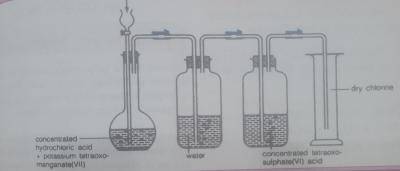
concentrated hydrochloric acid with potassium tetraoxomanganate
The answer is C my school take note
Potassium tetraoxomagnate(vii) oxidizes concentrated hydrochloric acid to liberate chlorine.
2Kmo4 + 16Hcl___ 2Mncl2 + 2kcl + 8H20 + 5Cl2
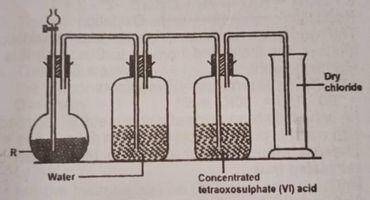
The mixture in R is Kmo4 and conc Hcl
In the experimental setup above drops of conc hcl is added to kmno4 in R when this happens chlorine is evolved as well as small amount of hydrogen chloride,the mixture of gasses is passed through water and the hydrogen chloride dissolves leaving chlorine,the pure chlorine gas is then dried as it passes through concentrated teteraoxosulphate(vi) acid.


the answer is C why because when using potassium permanganate heat is not involved but when MnO2 is used heat will be required even though it's the accepted method


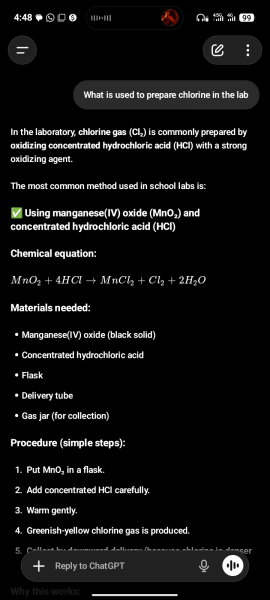
Based on the provided image and search results, in the diagram, R is a mixture of manganese (IV) oxide and concentrated HCl, which corresponds to option D. This mixture is commonly used in the laboratory preparation of chlorine gas. The reaction that occurs is:
MnO2(s) + 4HCl(aq) → MnCl2(aq) + 2H2O(l) + Cl2(g)

