In the extraction of sodium from fused sodium chloride, the anode is made of platinum because
sodium is formed at the anode
chlorine is formed at the anode
sodium does not react with platinum
chlorine does not react with platinum
Explanation
Video Explanation
Post your Contribution
Discussions (14)

The selected answer is wrong:
oxidation occurs at the anode and since sodium is not deposited in an electrolytic process 'plus' sodium as a metal would normally be deposited at the cathode therefore platinum is used at the anode as an inert electrode is to prevent depostion of chlorine gas that undergoes oxidation at anode
REF: ELECTROLYSIS,NEW SCHOOL CHEMISTRY

Sodium is extracted by electrolytic reduction of molten or fused sodium chloride. On passing electricity through molten sodium chloride, decomposition occurs and sodium metal is formed at cathode and chlorine gas is formed at anode.
Since sodium does not react with platinum and chlorine does, that is the answer is c, therefore i support progressiveness
The anode will will not corrode during
the electrolysis and won't react with
the sodium hydroxide sodium
hypochlorite that is formed. Because
platinum is resistant to chlorine and
water. Hence it doesn't react with any
chemical and we get pure products.
Platinum is used as an inert electrode.
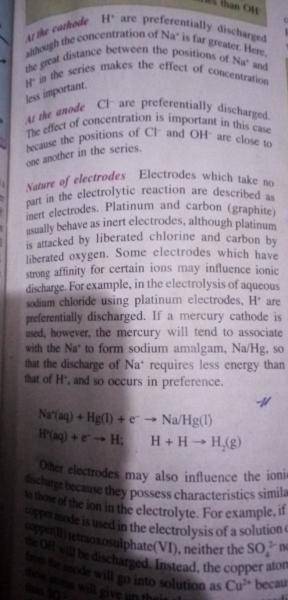
Listen up everyone, the selected answer is right. If mercury is used as the anode , sodium will react with it releasing sodium amalgam, but if platinum is used hydrogen will discharge instead of sodium. Therefore, platinum is used because it does not react with sodium. Option C 💯. I rest my case.

The selected answer is wrong:
Why do I say so?
Oxidation occurs at the anode and since sodium is not deposited in an electrolytic process 'plus' sodium as a metal would normally be deposited at the cathode therefore platinum is used at the anode as an inert electrode is to prevent depostion of chlorine gas that undergoes oxidation at anode.

Listen up guyz.
This question is an obvious trap. The question states the opposite of the true situation.
Platinum is not used as an electride, if chlorine will be used at that electrode. This is because chlorine attacks platinum.
The anode used here is the graphite rod.
Option D is very correct
The selected answer to this is wrong the answer ought to be D
You guys even have an explanation video on why D is correct


i think the ansa is option D just an opinion tho
i stand to be corrected pls

