Na
K
Ca
Al
Explanation
Video Explanation
Post your Contribution
Discussions (19)

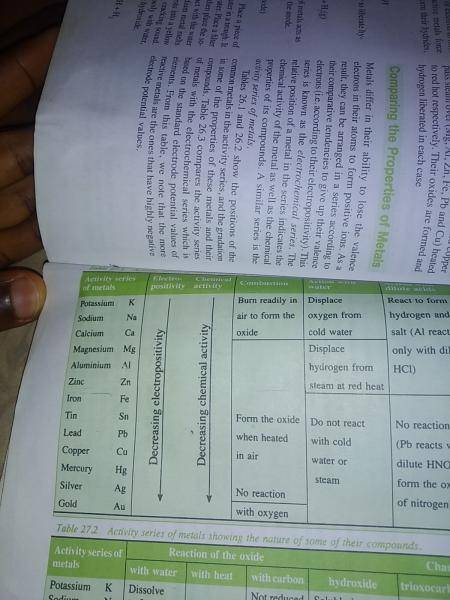
K,Na and Ca-displace hydrogen from cold water. The reaction of K and Na cold water explosive and vigorously violent respectively.Both produce liliac and yellow vapour resp.with cold water.Therefore,the reaction is dangerous and must be done with extreem care. However,Ca(alkaline earth metal) reacts slowly with cold water to give bubbles of hydrogen and aqeuous Cao. This reaction is save.It's not dangerous. Note: the three metals can liberate hydrogen from cold water,but only Ca and cold water is save. (C) -best answer.
K,Na and Ca-displace hydrogen from cold water. The reaction of K and Na cold water explosive and vigorously violent respectively.Both produce liliac and yellow vapour resp.with cold water.Therefore,the reaction is dangerous and must be done with extreem care. However,Ca(alkaline earth metal) reacts slowly with cold water to give bubbles of hydrogen and aqeuous Cao. This reaction is save.It''s not dangerous. Note: the three metals can liberate hydrogen from cold water,but only Ca and cold water i

BUBBLES ONLY...specific the answer is calcium, the very electropositive ones mentioned react vigorously with FLAMES!!!

Not true bro.very electropositive elements like "K,Na and Ca" attack cold water to liberate hydrogen But the question said "in bubbles" and it's only "Ca" that does that so the correct answer shud be "C"

This is how u guyz keep bringing my scores down. The answer is Calcium for goodnesss sake.
yeah
c is correct
ca react slowly with cold water to liberate hydrogen bubbles.
but k and na react with cold water vigorously to liberate hydrogen gas not bubble.

Na reacts with extremely cold water to yield H2(g) WHILE ca reacts with Warm water to yield H2(g)...it's spontaneous in sun light but slower in diffused light...
The correct answer is 'C' as Calcium is a group 2 metal that does liberate Hydrogen slowly. Unlike 'Na' and 'K' which liberate Hydrogen fast.


