Fe
Cu
Ca
Sn
Explanation
Video Explanation
Post your Contribution
Discussions (28)

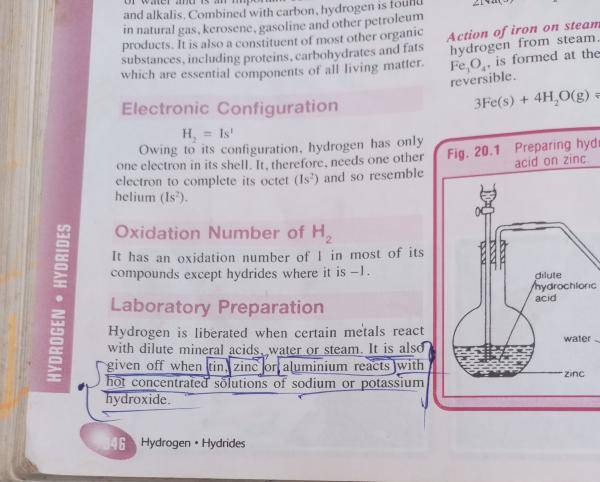


Admin d answer is wrong.only tin(sn),alluminium(al) and zinc(zn) can displace hydrogen from it alkaline(oh-) solution.gbam*

i think the answer should be 'c'
That is calcium,coz calcium is more reactive than tin.
The coreect answer is C calcium
When it’s a hot alkaline solution, only metals that are above hydrogen in the reactivity series and can react with alkalis (like NaOH, KOH) can displace hydrogen gas.
Now, check them one by one:
A. Fe (Iron) → Reacts with acids but not strong enough with hot alkalis.
B. Cu (Copper) → Very unreactive, cannot displace hydrogen.
C. Ca (Calcium) → Very reactive. It can react even with cold water, so it can easily displace hydrogen from hot alkaline solution.
D. Sn (Tin) → Moderately reactive, but not strong enough for this.


Calcium is a highly reactive metal that can react with hot alkali to form calcium hydroxide and release hydrogen gas.
Tin is not reactive enough to displace hydrogen in an alkaline solution. It may react with strong alkalis under specific conditions, but it does not release hydrogen gas significantly.


Its Tin during the production of Sodium hexahydoxostannate(iv)
Sn 2 NaOH 4 H2O → Na2[Sn(OH)6] 2 H2

