Fe
Al
Zn
Pb
none of the options is correct
Explanation
Video Explanation
No video available
Post your Contribution
Discussions (24)


Nothing like that!
Myschool, UTME 1986 has no Option E. Why add it when the coreect answer is between A-D as they provided initially? Aluminum trioxocarbonate (IV) doesn't Exist. In an attempt to prepare it, Aluminum hydroxide is formed instead.
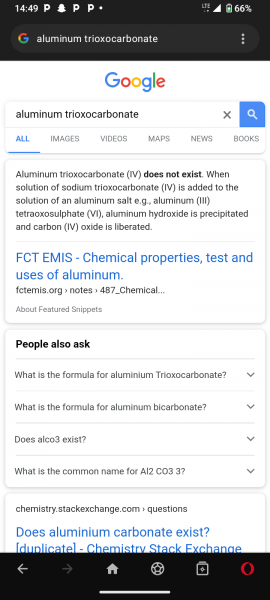

The correct answer is B. Al.
Here's why:
* Trioxocarbonate (IV) ions: These are carbonate ions (CO₃²⁻). Metals can form stable carbonates when they can readily form a +2 charge (or in some cases, a +1 charge).
* Aluminum (Al): Aluminum tends to form a +3 charge (Al³⁺). This makes it difficult for aluminum to form a stable carbonate because the charge difference between Al³⁺ and CO₃²⁻ makes the compound less stable.
The other options:
* Iron (Fe): Iron commonly forms a +2 charge (Fe²⁺) and can form stable carbonates like iron(II) carbonate (FeCO₃).
* Zinc (Zn): Zinc forms a +2 charge (Zn²⁺) and readily forms zinc carbonate (ZnCO₃).
* Lead (Pb): Lead can also form a +2 charge (Pb²⁺) and forms lead(II) carbonate (PbCO₃).
In summary: Aluminum's tendency to form a +3 charge makes it less likely to form a stable trioxocarbonate (IV) compound compared to the other metals listed.
The correct answer is: B. Al (Aluminium)
Explanation:
Trioxocarbonate (IV) is the systematic name for carbonates, with the general formula MCO₃, where M is a metal. For a metal to form a stable carbonate, it usually needs to have:
A larger ionic size
Lower charge density, to stabilize the large carbonate ion (CO₃²⁻)
Let’s analyze each option:
Metal Can it form a stable carbonate? Remarks
Fe Yes (e.g., FeCO₃ - siderite) Iron(II) carbonate is known and relatively stable
Al  No Aluminium carbonate is unstable and does not exist in solid form under normal conditions — it hydrolyzes
Zn Yes (ZnCO₃) Stable carbonate of zinc
Pb Yes (PbCO₃) Lead(II) carbonate exists and is stable
E. None Incorrect Because Al is the correct exception
 Final Answer: B. Al


@my school please change the answer or review the question for others to not get confused. Thanks alot
That thing supposed to be All of the above. Because Aluminium, Iron Zinc and Lead do not form a stable trioxocarbonate(iv)

Their explanation say Al doesn't form stable AlCO3 but they pick the wrong answer

