Which of the following salts when dissolved in water will NOT give the corresponding pH value?
NaHSO4, pH < 5
Na2CO3, pH > 8
Na2Cl,pH = 7
NaHCO
Explanation
No explanation available
Video Explanation
No video available
Post your Contribution
Discussions (17)

The correct answer is D. NaHCO3, pH < 6.
When dissolved in water, NaHSO4 will undergo partial dissociation to form H+ ions and HSO4- ions. HSO4- will then undergo further dissociation to form more H+ ions and SO4^2- ions. This process will result in the formation of an acidic solution and a pH value of less than 5.
When Na2CO3 is dissolved in water, it will undergo complete dissociation to form Na+ ions and CO3^2- ions. CO3^2- ions will react with water to form HCO3- ions and OH- ions. This process will result in the formation of a basic solution and a pH value of greater than 8.
When Na2Cl is dissolved in water, it will dissociate into Na+ ions and Cl- ions. Neither of these ions will react with water to produce H+ or OH- ions. Therefore, the pH of the resulting solution will remain neutral at pH 7.
When NaHCO3 is dissolved in water, it will undergo partial dissociation to form H+ ions and HCO3- ions. This process will result in the formation of a slightly acidic solution and a pH value of less than 6. Therefore, the correct answer is D, NaHCO3, pH < 6

Understanding Salt Hydrolysis
When salts dissolve in water, they can undergo hydrolysis, which means they react with water to produce either acidic, basic, or neutral solutions. This depends on the nature of the ions that make up the salt.
* Salts of strong acids and strong bases: These salts produce neutral solutions (pH = 7) because neither ion reacts significantly with water.
* Salts of strong acids and weak bases: These salts produce acidic solutions (pH < 7) because the cation from the weak base reacts with water to produce hydronium ions (H₃O⁺).
* Salts of weak acids and strong bases: These salts produce basic solutions (pH > 7) because the anion from the weak acid reacts with water to produce hydroxide ions (OH⁻).
Analyzing the Options
* A. NaHSO₄, pH < 5: NaHSO₄ is a salt of a strong acid (H₂SO₄) and a weak base (HSO₄⁻). Therefore, it should produce an acidic solution (pH < 7), which aligns with the given pH value.
* B. Na₂CO₃, pH > 8: Na₂CO₃ is a salt of a weak acid (H₂CO₃) and a strong base (NaOH). It should produce a basic solution (pH > 7), consistent with the given pH value.
* C. NaCl, pH = 7: NaCl is a salt of a strong acid (HCl) and a strong base (NaOH). It should produce a neutral solution (pH = 7), matching the given pH value.
* D. NaHCO₃, pH < 6: NaHCO₃ is a salt of a weak acid (H₂CO₃) and a weak base (HCO₃⁻). However, the basic nature of HCO₃⁻ is stronger than its acidic nature. Therefore, it should produce a slightly basic solution (pH > 7), not an acidic solution as indicated.
The Answer
The salt that will NOT give the corresponding pH value is D. NaHCO₃, pH < 6. It should have a pH greater than 7.
i think option A and D is even correct for this
strong Acid strong base = 7
for A now
for the strong base weak acid greater than 8

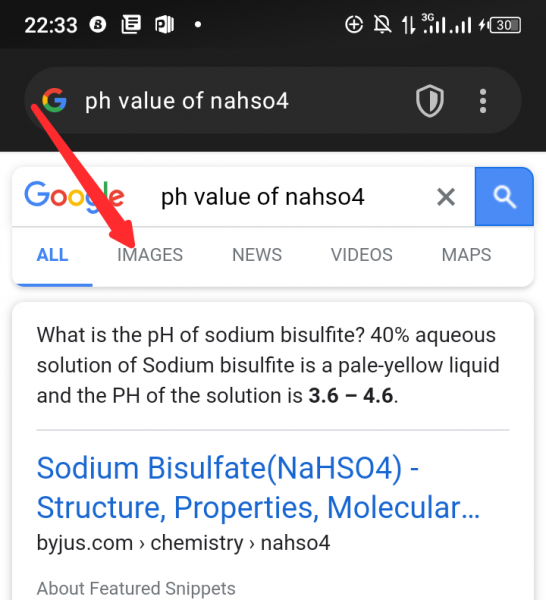
Sorry I've realize my mistake, I didn't read the question properly... The answer is D
Bcz ph


if this is how jamb conduct the exam many would fail just because of time factor. you people didn't consider that network varies accessibility is varied.

