Solid sodium hydroxide on exposure to air absorbs a gas and ultimately gives another alkaline substance with the molecular formula?
NaOH.H2O
NaOH.N2
Na\(_2\)CO\(_3\)
NaHCO3
NaNO3
Explanation
Video Explanation
No video available
Post your Contribution
Discussions (7)

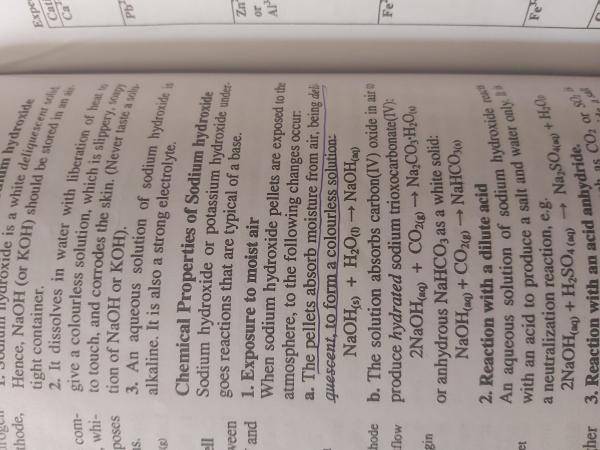
NaOH (sodium hydroxide), when exposed to the air, will react with the carbon dioxide in air, to form sodium carbonate

A breakdown of what happens with solid sodium hydroxide (NaOH):
* Absorption:
* Sodium hydroxide is hygroscopic, meaning it readily absorbs moisture from the air. This is why you might notice it becoming wet or "liquefying" when left exposed.
* It also reacts with carbon dioxide (CO₂) present in the air.
* Reaction with CO₂:
* The reaction with CO₂ leads to the formation of sodium carbonate (Na₂CO₃).
Therefore the correct answer is that the solid sodium hydroxide, when exposed to air, absorbs carbon dioxide, and forms sodium carbonate. The closest answer provided is C. Na2CO3O, which is a variation of the correct formula.
Here's a simplified way to think about it:
* NaOH + CO₂ → Na₂CO₃ + H₂O
It's important to remember that handling sodium hydroxide requires caution, as it can be corrosive.


