different physical but the same chemical properties
different chemical but the same physical properties
the same chemical and physical properties
different atomic structure
the same position in the periodic table
Explanation
Video Explanation
No video available
Post your Contribution
Discussions (29)

Firstly I'll like to applaud all those that said the answer is B
sorry to tell you allotropes have the same chemical properties
lets look at vombustion of coke
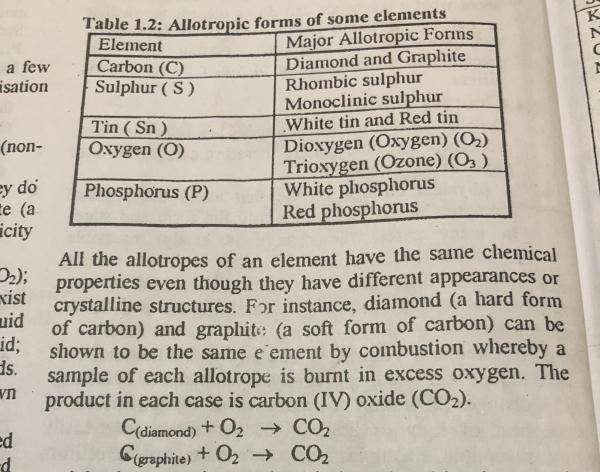
Now carbon can exist as either diamond or graphite in crystalline state
so in a combustion reaction,
C+O2--->CO2---------Combustion reaction for diamond
C+O2-->CO2------Combustion reaction for graphite
Now from this we see different allotropes of carbon undergo a chemical reaction to both form CO2
Meaning they have the same chemical properties
note diamond is hard while graphite is soft meaning different physical properties
So option A is correct
Guys please lets be smart for goodness sake
Allotropy is the ability of an element to exist in two or more different forms in the same physical state..
Note the emphasis on physical STATE
Physical state(solid, liquid and gas) veryDifferent from physical properties
Please guys lets be smart and understand the question before commenting something and misleading others. the answer is A
A is the answer
Graphite and Diamond do not have same physical property
but they react as carbon with oxygen to form CO2 and H2O

please answer is B.. allotropy is the existence of an element in different forms but same physical state.

D. different atomic structures
Allotropes are different forms of an element that exist in the same physical state but have different structures and properties due to different arrangements of atoms or molecules. Examples of allotropes include diamond and graphite, which are both forms of carbon with different atomic arrangements, and oxygen, which can exist as both O2 and O3 (ozone) with different molecular structures.
The correct answer is B because allotropy is the occurance of an element with more than one form in the same physical state

A. different physical but same chemical properties ❌
Wrong — allotropes are the same element; chemical properties are similar but not defined this way, and “different physical” is incomplete/incorrect as definition.
B. different chemical but same physical properties ❌
Wrong — allotropes are the same element, so chemical identity is the same element; this option is misleading.
C. same chemical and physical properties ❌
Wrong — allotropes differ in physical properties (e.g., diamond vs graphite).
D. different atomic structure ✔️
Correct — this is the defining cause of allotropy.
E. same position in the periodic table ❌
True statement for elements in general, but not definition of allotropes.
Allotropes are different forms of the same element that exist in the same physical state but have different chemical and physical properties due to differences in their molecular or crystalline structure. Therefore, the correct answer is:
B. different chemical but the same physical properties
they have THESAME CHEMICAL PROPERTIES BUT DIFFERENT PHYSICAL STATES. option Ais correct

Here is an explanation:
it's {B}
6th edi, Ababio{Carbon and its compound-allotropes of carbon }
REF: pg 121
The physical state of a substance refers to the form in which it exists, such as solid, liquid, or gas. The physical properties of a substance, on the other hand, are the characteristics that can be observed or measured without changing the chemical composition of the substance. These properties include color, odor, density, melting point, boiling point, and hardness, among others.
allotropes have neither the same physical or chemical properties. the properties that make allotropes of elements dft from each other is their pressure, temperature abd atomic structure.



