CuO
Fe2O3
PbO2
ZnO
Explanation
Video Explanation
No video available
Post your Contribution
Discussions (18)


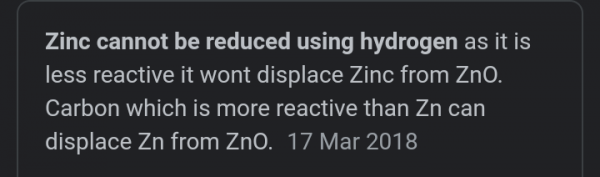

The answer is D because Haematite is reduced to metal using Hydrogen a process used in the extraction of pure iron in a small quantity instead of the usual blast furnace system

The selected option is wrong
iron, lead and copper oxides are reduced by hydrogen to their respective metals. The answer is zinc.

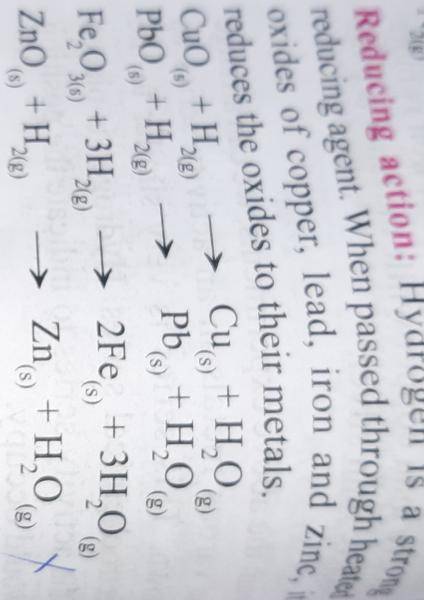


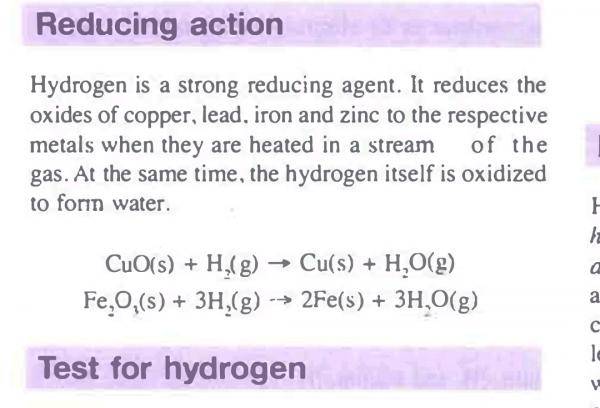
Hydrogen is a strong reducing agent. It reduces the oxides of copper, lead. iron and zinc to the respective metals when they are heated in a stream of the gas. none of the answer is correct
The answer is actually meant to be copper, not Zinc. Copper is way lower than hydrogen in the metalent activity series, but Zinc is actually higher than hydrogen in thr series. That's why Copper won't be able to displace Hydrogen in this reaction.
The prolific transition elements are extracted from their ores by chemical reduction of their ores.either by hydrogen,carbon(ii) oxide and ammonia.
On this,as I will always say,zinc and all member under it in the periodic tanle is an exception to transition elements .so hydrogen cannot reduce it.

this dont have an ansa cos we all know that oxygen is a Strong reducing agent that reduces the oxides of those less reactive metals to thier metal ,oxidizing itself to water in the process

