it supports combustion
It is strongly acidic in water
It is very soluble in water
It supports the buring of magnesium to produce magnesium oxide
Explanation
Video Explanation
No video available
Post your Contribution
Discussions (18)

Option D is the most accurate.
Carbon(iv) oxide is not VERY soluble in water, it's just soluble to a certain extent (refer to New School Chemistry under the topic 'carbon' for more information); and yes, carbon(iv) oxide supports the combustion of magnesium. It's an established fact, also stated in the textbook.
Please revisit this question.
Thank you.

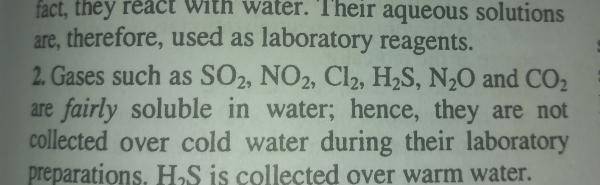
My school the answer is D because Carbondioxide supports the burning of magnesium but Carbon(IV)oxide is fairly soluble in water

Evidence: When burning magnesium is placed in carbon dioxide it keeps burning with a bright flame. ... Explanation: Magnesium is higher in the reactivity series than carbon so it is more reactive than carbon and removes the oxygen from the carbon dioxide (to give carbon and magnesium oxide).
Here's what my ai said
The correct answer is:
D. It supports the burning of magnesium to produce magnesium oxide.Certainly! The combustion reaction of magnesium in carbon dioxide can be represented by the following equation:
\[ 2Mg + CO_2 \rightarrow 2MgO + C \]
In this reaction, magnesium (Mg) reacts with carbon dioxide (CO2) to produce magnesium oxide (MgO) and carbon (C).
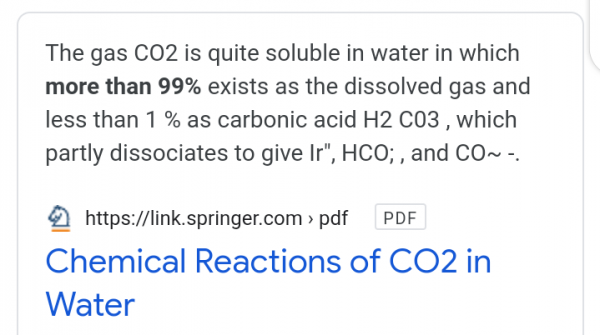
C is correct , The reason is that co2 does not really support the combustion directly but as a result on the intense heat Mg emits when heat is been applied,it decompose CO2 to evolve oxygen which in turns oxidizes the mg
CO2 + Mg= MgO+C

and even though CO2 doesn't directly burn but it burns by decomposition into oxygen the option is framed as 'supports the burning of magnesium' which it does by it's decomposition

I'm i de only 1 dat thinks A is de answer?
Carbon(iv)oxide does not support combustion

