Iron galvanized with zinc is cathodically protected from corrosion. This is because?
zinc has a more positive oxidation potential than iron
zinc has less positive oxidation potential than iron
bith have the same oxidation potential
zinc is harder than iron
Explanation
Video Explanation
No video available
Post your Contribution
Discussions (11)

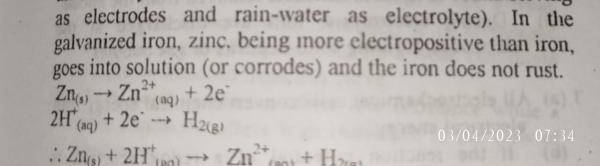

The answer ought to be A
In reality, zinc has a more positive oxidation potential than iron. This means that zinc is more likely to undergo oxidation (lose electrons) compared to iron. In the context of galvanization, this is precisely why zinc is used to protect iron from corrosion through cathodic protection. The more reactive zinc corrodes sacrificially, protecting the less reactive iron.

the correct option is A. zinc is higher up the electrochemical cell than iron. reacts easily relative to iron(losses electron readily in comparison to Fe)
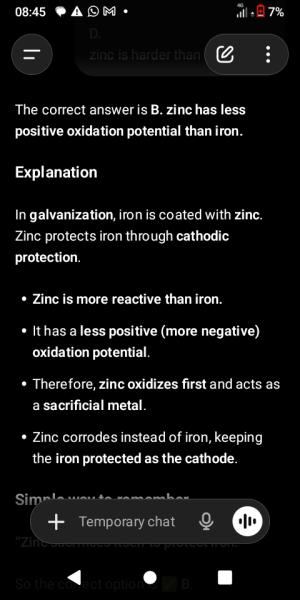

Correct answer: B. zinc has less positive oxidation potential than iron
Explanation (simple):
Zinc is more reactive than iron. This means zinc has a less positive (more negative) oxidation potential than iron.
When iron is galvanized with zinc:
Zinc oxidizes first (loses electrons more easily).
Zinc acts as a sacrificial anode.
Iron becomes the cathode, so it is protected from corrosion.
So even if the coating is scratched, zinc corrodes instead of iron — this is why the protection is called cathodic protection.
 Therefore, Option B is correct.

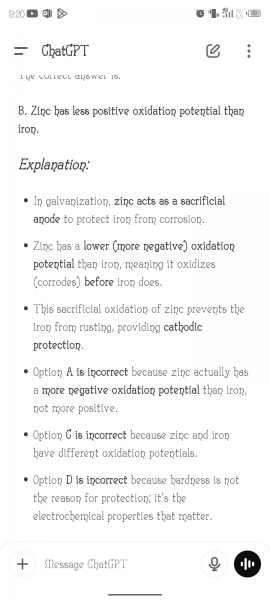
The answer is B please, check the electrode potential table,
Ref Understanding Chemistry

