Diagram J is a protease while diagrams K,L,M, and N are food substances, study them and answer this question.
After a reaction between protease J and the food substance, the end product would be
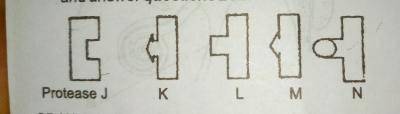
fatty acids
glucose
amino acids
water
Explanation
No explanation available
Video Explanation
No video available
Post your Contribution
Discussions (1)

Based on the information you provided and the image of the diagrams, the most likely end product of the reaction between protease J and the food substances K, L, M, and N would be:
C. amino acids
Here's why:
Protease J: The diagram you sent shows a keyhole-shaped molecule, which is a typical representation of a protease enzyme. Proteases are enzymes that specialize in breaking down proteins into smaller molecules.
Food substances K, L, M, and N: Although the specific food substances in the diagrams are not labeled, they appear to be different types of protein-rich foods, such as meat, legumes, or nuts.
Therefore, when protease J comes into contact with these food substances, it will break down the protein molecules in the food into smaller units called amino acids. These amino acids can then be absorbed by the body and used for various purposes, such as building new proteins, repairing tissues, or producing energy.
The other options are less likely because:
A. Fatty acids: While some food proteins may contain small amounts of fat, the primary function of proteases is to break down proteins, not fats. Therefore, fatty acids would not be the main end product of this reaction.
B. Glucose: Glucose is a type of carbohydrate, and proteases do not break down carbohydrates. They specifically target proteins.
D. Water: Water is a byproduct of many chemical reactions, but it is not the main product of protein digestion by proteases.
It's important to note that the specific amino acids produced by the digestion of different proteins will vary depending on the amino acid composition of the original protein. However, in general, the breakdown of proteins by proteases always results in the release of amino acids.

