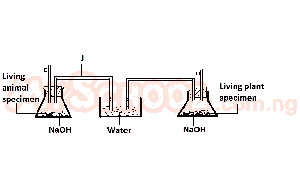
porosimeter
potometer
manometer
auxanometer
Explanation
No explanation available
Video Explanation
No video available
Post your Contribution
Discussions (7)

Based on the diagram shown in the image, the correct answer is B: potometer.
Here is the explanation:
What the Diagram Shows
The image shows a typical experimental setup with:
· A living plant specimen (usually a leafy shoot) inserted into one end of a tube.
· A container of water connected to the system.
· A scale or ruler along a horizontal capillary tube.
· An air bubble moving through the capillary tube.
What is a Potometer?
A potometer (also called a transpirometer) is an apparatus used to measure the rate of water uptake by a plant. This is used to estimate the transpiration rate.
How it works (as shown in the diagram):
1. The plant shoot absorbs water from the apparatus.
2. As water is lost from the leaves (transpiration), the plant pulls water from the tube.
3. This causes the air bubble (labelled j in your diagram) to move along the capillary tube.
4. By measuring how far the bubble moves over a set time, you can calculate the rate of transpiration.
manometer measures pressure mainly in fluid while barometer measures atmospheric pressure i.e fortin and aneroid barometer (that can also be used as altimeter).

Based on the diagram shown in the image, the correct answer is B: potometer.
Here is the explanation:
What the Diagram Shows
The image shows a typical experimental setup with:
· A living plant specimen (usually a leafy shoot) inserted into one end of a tube.
· A container of water connected to the system.
· A scale or ruler along a horizontal capillary tube.
· An air bubble moving through the capillary tube.
What is a Potometer?
A potometer (also called a transpirometer) is an apparatus used to measure the rate of water uptake by a plant. This is used to estimate the transpiration rate.
How it works (as shown in the diagram):
1. The plant shoot absorbs water from the apparatus.
2. As water is lost from the leaves (transpiration), the plant pulls water from the tube.
3. This causes the air bubble (labelled j in your diagram) to move along the capillary tube.
4. By measuring how far the bubble moves over a set time, you can calculate the rate of transpiration.
Why the other options are incorrect:
· A (Porosimeter): An instrument used to measure the porosity (pore size) of materials or the stomatal aperture in leaves. Not for transpiration rate.
· C (Manometer): An instrument used to measure pressure (e.g., blood pressure or gas pressure). It typically uses a U-shaped tube with liquid.
· D (Auxanometer): An instrument used to measure the growth rate of plants. It records increases in length over time.
Final Answer:
B: potometer
@myschool nuel
the correct answer is photometer
even the built in AI explains that
please corrections 🙌

