Two organisms of different species, living in close association but not dependent on each other are referred to as
parasites
commensals
symbionts
autotrophs
Explanation
Video Explanation
No video available
Post your Contribution
Discussions (34)

Are you guys kidding me! The word 'close association' should even tell you guys the answer. Commensalism is absolutely correct. Autotrophs dont form associations, commensals form, in which one is dependent on the other but both are not dependent on each other in the case of mutualism. The answer is definitely B.

Commensalism is a relationship between species in which one benefits and the other is unaffected. ... Symbiotic relationships can also be classified by the physical relationship between the two species. Endosymbionts live inside the tissues of the host, while ectosymbionts live outside of their partner species.
the word close association and independent on each other which is mutualism but its not the option then we partialy take commensal

If u guys say it is autotrophs, but remember the word "Close association"
From my own point of view it's C
There's also a type of symbiont called Amensalism; each of them doesn't depend on each other, the association there is that one harm the other ,but not without getting any pleasure from it
Eg ungulate( eg zebra) working on a plantation, and in the process tramping on it
Autotrophs are actually independent of each other but are not 'closely associated ' but commensalism on the other hand Involves two organisms that are closely associated and independent on 'each other ' though one benefits from the other but the benefit and dependency is not 'mutual' which would make option B (Commensalism) correct 🤝💯
autotrophs aren't in association with another animal. the most feasible should be commensalism

Autotrophs is crrt cause they are independent of each other meaning they can produce their own food

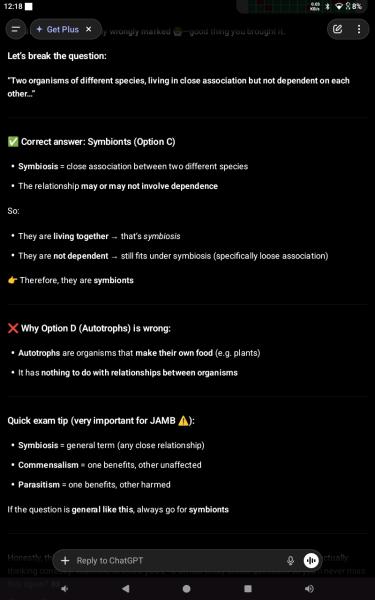

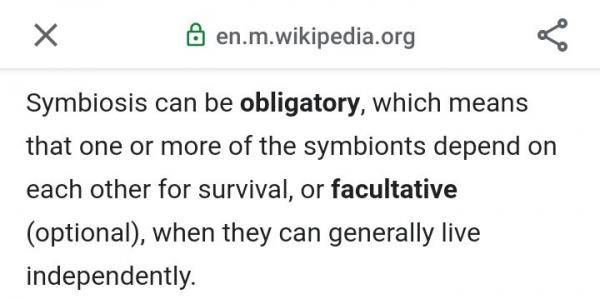
the answer is commensalism, autotrophs is not even among the types of association



