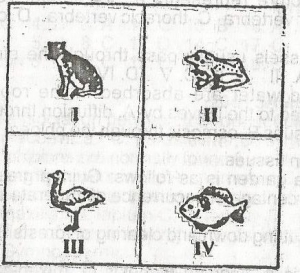
IV
III
II
I
Explanation
Video Explanation
No video available
Post your Contribution
Discussions (27)

Ovoviviparous animals develop within eggs that remain within the mother's body up until they hatch or are about to. This strategy of birth is known as ovoviviparity. It is similar to vivipary in that the embryo develops within the mother's body. Unlike the embryos of viviparous species, ovoviviparous embryos are nourished by the egg yolk rather than by the mother's body. However, the mother's body also provides for gas exchange.
Ovoviviparity is employed by many fish (including sharks), reptiles, and invertebrates.
Please correct it, d cor answer is A, go to modern biology (page 28, topic vertebrate reproductive methods) ovoviviparous: fishes, viviparity: mammals, oviparity: reptiles, my school please stop confusing us, i d't no were to get d correct past jamb Q & Answer if not here, so i believe u ar helping use, thanks
the correct answer should be A
even though majority of fishes lay eggs but still certain species of sharks such as the BASKING SHARKs as well as GUPPIES and other fishies are ovoviviparous
because ovoviviparous animals produce eggs, but instead of laying them, the eggs develop and hatch inside the mother's body and remain there for a time.
so if there are no options such as sharks or sea hourse or any other ovoviviparous animals then the appropriate answer is A and not B which is a bird and bird like ostrich are oviparous
so My school is wrong

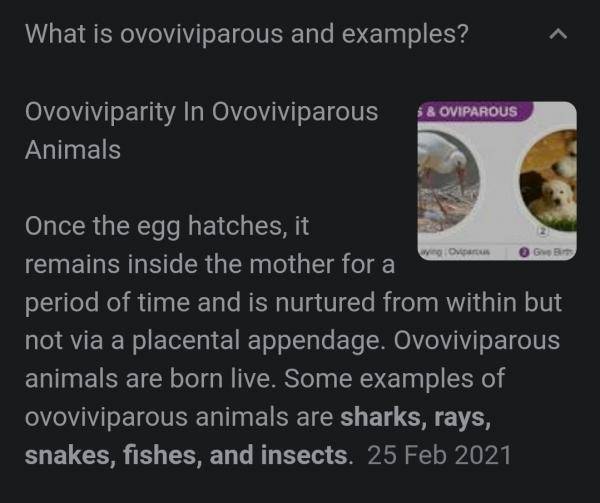
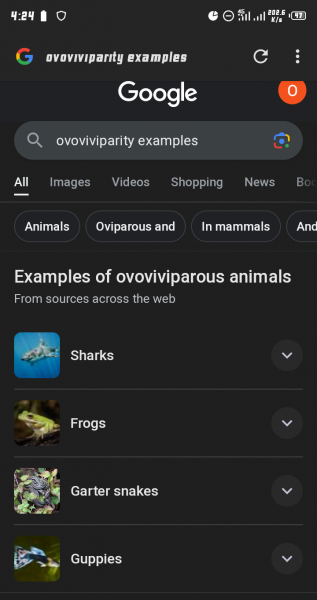

A is lucid
Ovoviparity refers to a type of animal reproduction where the eggs are retained within the mother's body until they hatch, and it's found in many reptiles, including some lizards and snakes. The mother doesn't provide any nourishment to the eggs while they are developing, so ovoviparous animals are considered "egg-laying" and not "live-bearing" like placental mammals. Did you know some sharks and fish also reproduce via ovoviparity? 

wrong answer....the correct answer is fish which is A....ovoviparity consist of fish n reptiles

