Tissue outside the vascular cambium
Cork-like tissue found only in stems
Brown tissue never found in primary growth
Cork-like tissues of old trees
Explanation
No explanation available
Video Explanation
No video available
Post your Contribution
Discussions (13)

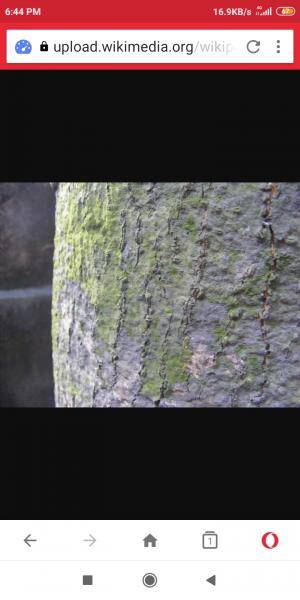
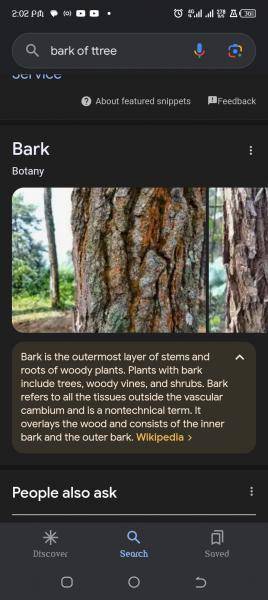
Bark is the outermost layers of stems and roots of woody plants. Plants with bark include trees, woody vines, and shrubs. Bark refers to all the tissues outside the vascular cambium and is a nontechnical term. It overlays the wood and consists of the inner bark and the outer bark.

The correct answer is A. Tissue outside the vascular cambium.
Bark is the outermost layer of a tree trunk, branch, or root, and it encompasses all the tissues outside the vascular cambium, including:
- Phelloderm (secondary cortex)
- Cork (phellem)
- Cork cambium (phellogen)
- Rhytidome (outer bark)
The vascular cambium is the layer of cells that produces new xylem and phloem cells, and it is located inside the bark.
The other options are not accurate descriptions of bark:
- B. Bark is not limited to stems and is found in roots and branches as well.
- C. Bark can be found in both primary and secondary growth.
- D. While bark can be cork-like, this description is too narrow and doesn't capture the full complexity of bark.


The best description of bark is: A. Tissue outside the vascular cambium
Bark includes all the tissues external to the vascular cambium, which comprises the phloem, cork cambium, and cork.

