Rhizopus, also known as bread mold, reproduces sexually when two compatible hyphae fuse. This process produces diploid zygospores, which germinate into new mycelia.
Steps in sexual reproduction
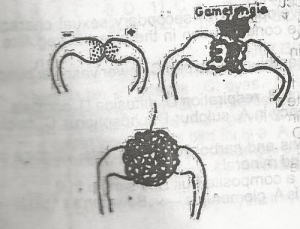
Compatible hyphae come into contact
Small outgrowths called progametangia form
The progametangia mature and the common wall disappears
The contents of the progametangia mix, fusing (+) and (-) strains
Diploid nuclei form
The zygospore enlarges and secretes a five-layered structure
The zygospore enters a resting period
The zygospore germinates, producing germ sporangiophores or promycelium
The promycelium develops a germ sporangium at the tip, releasing spores





Contributions ({{ comment_count }})
Please wait...
Modal title
Report
Block User
{{ feedback_modal_data.title }}