Sundew
Loranthus
Rhizopus
Tapeworm
Explanation
Video Explanation
Post your Contribution
Discussions (28)

Myschool correct this thing abeg. The video instructor said it's B and you still left it at A🙄

The Answer Is Loranthus Cus Sundew Is Insectivorous i.e They Feed On Insect(Canivorous) And Autotrophic But Loranthus Just Like Mistletoe They Are Climbing Plant With Their Hautoria Into The Stem Of The Tree(STRAIGHT TO THE XYLEM TO GET WATER AND MINERALS) In Which They Are Climbing. MYSCHOOL LORANTHUS IS THE ANSWER.

Please the right answer is meant to be loranthus, sundew is autotrophic and CARNIVOROUS, rhizopus or tapeworm can't the answer they have not chlorophyll. Thanks

The answer is meant I be “ Loranthus” because it is capable of photosynthesis and it is also a parasite.
The answer should be B because Aerial part of the Loranthus bear green leaves and is capable of Photosynthesis. Explanation: Loranthus is a stem-partial parasite.
yap x loranthus cos they are parasitic not carnivora .. option B x d correct
Sundew is a predator or a carnivorous not a parasite while loranthus is a parasite
A) Sundew: A carnivorous plant. It's autotrophic (photosynthetic) but not parasitic. It traps insects for nutrients, but doesn't live on them.
B) Loranthus: A parasitic plant. It has chlorophyll and can photosynthesize (autotrophic) but also derives nutrients from its host.
C) Rhizopus: A saprophytic fungus. It gets nutrients from dead organic matter, not parasitic.
D) Tapeworm: An endoparasite. It lives inside the host's intestines and is heterotrophic (cannot produce its own food).
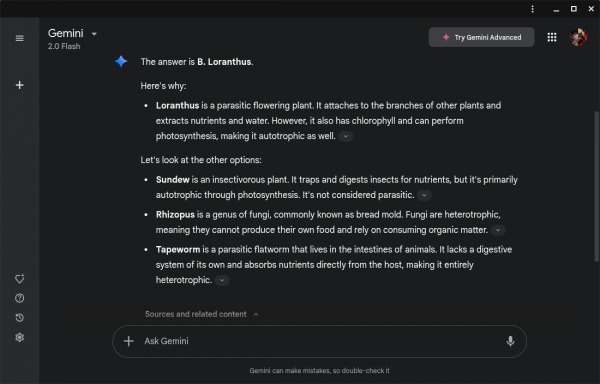
they are correct, because
all the options are wrong, the most appropriate is sundew
don't forget that it only takes part of its nutrients from insects ie nitrogen
so since they still have green pigment they can manufacture their own food and also get their on water
this is jamb we are talking about most appropriate (ps: you can correct me if I'm wrong)

