During blood transfusion, agglutination may occur as a result of the reaction between
contrasting antigens and antibodies
two different antigens
two different antibodies
similar antigens and antibodies
Explanation
Video Explanation
Post your Contribution
Discussions (23)

The answer is wrong agglutination only occurs when an antigen and its complement antibody come together. That is similar antigen and antibody. ANSWER IS D! PLEASE


A is correct
When a person receives a blood transfusion, their immune system may recognize the antigens on the red blood cells of the donated blood as foreign and produce antibodies against them. If the donated blood contains antigens that are different from the recipient's own blood, the antibodies produced by the recipient's immune system will bind to these foreign antigens, causing agglutination or clumping of the red blood cells. This agglutination can block blood vessels and prevent oxygen from reaching the body's tissues, causing serious health problems.
The correct option is:
A. contrasting antigens and antibodies
Agglutination during blood transfusion occurs when there is a reaction between antigens present on the surface of red blood cells and antibodies present in the recipient's plasma. This reaction can lead to the clumping of red blood cells, which can be harmful to the recipient. Therefore, agglutination typically results from the interaction between contrasting antigens and antibodies.
The correct answer is A - "contrasting antigens and antibodies." During blood transfusion, if the donor and recipient have different blood types, the antibodies in the recipient's blood may react with the antigens on the donor's blood cells, causing them to clump together in a process called agglutination. This reaction can be life-threatening, so it's important to make sure that blood transfusions are matched correctly. Blood types are determined by the presence or absence of specific antigens on the surface of red blood cells. 🩸

The correct answer is A. Contrasting antigens and antibodies. During blood transfusion, agglutination can occur when there is an incompatible match between the antigens on the surface of red blood cells and the antibodies present in the recipient's plasma, resulting in a reaction between contrasting antigens and antibodies.

During blood transfusion, agglutination may occur as a result of the reaction between *contrasting antigens and antibodies*. If incompatible blood is given in a transfusion, the donor cells are treated as if they were foreign invaders, and the patient's immune system attacks them accordingly. The antibodies in the recipient's blood react with the antigens on the incorrectly transfused blood cells, causing them to clump up and stick together, a process known as agglutination. So, the correct answer is **A**. It's worth noting that while antigens and antibodies are involved in many immune reactions, the specific reaction between contrasting antigens and antibodies is what causes agglutination during a blood transfusion.

please update the questions,the you tube videos gave correct answers , while the app picked the wrong option

During blood transfusion, agglutination (clumping of red blood cells) occurs as a result of a reaction between **contrasting antigens and antibodies**.
Here's why:
* **Antigens** are substances (like proteins or carbohydrates) on the surface of red blood cells. The major antigens in blood typing are the A and B antigens.
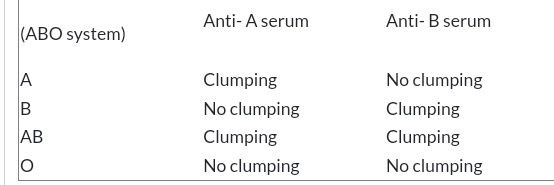
* **Antibodies** are proteins in the plasma that can bind to specific antigens. Individuals produce antibodies against the antigens that are *not* present on their own red blood cells. For example, someone with blood type A has anti-B antibodies.
If blood containing an antigen that is foreign to the recipient is transfused, the recipient's antibodies will bind to these foreign antigens, causing the red blood cells to clump together (agglutinate). This clumping can lead to serious complications.
Let's look at the other options:
* **B) two different antigens:** While different antigens are present on different blood types, agglutination doesn't occur simply because two different antigens are present in the same blood sample. It requires the presence of the *corresponding* antibody.
* **C) two different antibodies:** The presence of different antibodies in the recipient's plasma doesn't directly cause agglutination unless the corresponding antigens are introduced.
* **D) similar antigens and antibodies:** If the antigens and antibodies are similar (i.e., the recipient has antibodies against an antigen they also possess), agglutination would lead to the destruction of their own blood cells, which is not a typical transfusion reaction unless there's an autoimmune issue.
Therefore, the key to agglutination during blood transfusion is the interaction between foreign antigens in the donated blood and the corresponding antibodies in the recipient's blood.
Final Answer: The final answer is {contrasting antigens and antibodies}
The answer is clearly option A
for example blood group B has Antigen B and anti-A antibody
so if there need for transfusion it can be easily done using a donors blood of blood group B which also has Antigen B and anti-A antibody and agglutination won't occur which clearly rules out option D as wrong
The answer should be option A, please check again
Blood group A: antigen "A" antibody "b"
Blood group B antigen "B" antibody "a"

