Which of the following examples best describes camouflagic colouration in organisms?
A butterfly which has a real colouration on the wing
A green snake in a green grass
zebra with vertical stripes on the body
Certain tree frogs with bright colour patterns
A flower whose petals and sepals are of the same colou
Explanation
Video Explanation
No video available
Post your Contribution
Discussions (14)

Cryptic or concealing or camouflage enables the organisms to blend with it's back ground and be less visible to predators. E.g the green leaf-like mantis, dark colour on the dorsal side and silvery white color on the ventral side as in most fish, changing the colour pattern of the body to blend with that of the general surrounding as in green snake in green grass,breaking the body outline of the animal thus concealing it and obscuring it from predators as in zebra having alternating parallel bands of black and white colours arranged vertically on the trunk and horizontally on the limbs. N.B:Not as stripes as in Tiger,I will like to put it to you Myschool that Zebra is one of the animals that display cryptic colouration as well as green snake in green grass but not arranged in it's body as stripes,and that puts green snake in green grass as the only correct option among them@Myschool.com.ng

d stripes on a zebra's body is an example of disruptive colouration which means d animal has body stipes dat confuses d vision of d observer or predator.....while to camouflage means to conceal urself so as not to be easily seen by a predator eg.a green snake in green grass



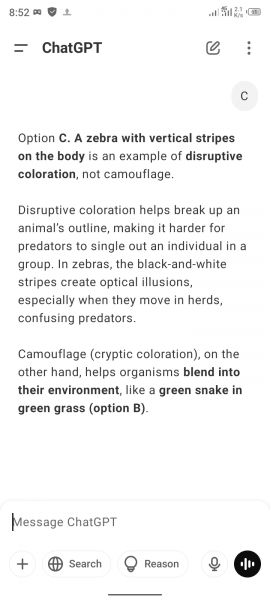
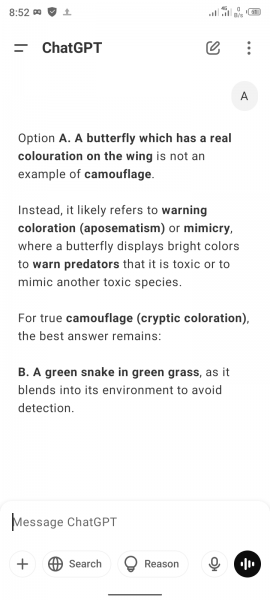

Please my school can u correct the answer it green snike in green grass and stop failing people when the are correct

@mysxhool, please rectify this error......even after dropping tiur evidence.....you still failed to correct it.

